
Melanotan II is the melanocortin peptide behind the “tan jab” trend. It also sits at the start of a research line that produced two approved medicines.
You’ll see how Melanotan II works and where its research came from. You’ll also see how it relates to approved melanocortin drugs. You’ll learn how to prepare for a clinician visit. The safety sections hold the full evidence and FDA picture.
The Quick Answer. Melanotan II is a synthetic cyclic peptide modeled on alpha-MSH. That natural hormone drives skin pigmentation. Researchers at the University of Arizona first developed it in the 1990s. Its research led to bremelanotide, an approved medicine. The safety sections cover the evidence, the reported effects, and FDA’s position in full.
Melanotan II at a Glance
This snapshot covers the essentials. Each row points to a section below.
| Item | Snapshot |
| Type | Synthetic cyclic peptide, analog of alpha-MSH |
| Targets | Melanocortin receptors MC1R, MC3R, MC4R, and MC5R |
| Also Called | MT-II, “tan jab,” “Barbie drug” |
| Related Approved Drugs | Afamelanotide and bremelanotide |
| First Human Study | 1996 pilot study in three healthy men |
| Latest FDA Step | Listed on FDA’s compounding safety page, April 22, 2026 |
What Is Melanotan II?
Melanotan II is a synthetic version of alpha-melanocyte-stimulating hormone. The body makes alpha-MSH in the pituitary gland. Melanotan II adds a lactam bridge that stabilizes the peptide against breakdown.
It binds and activates MC1R, MC3R, MC4R, and MC5R. Researchers call that profile non-selective. It explains why one peptide can touch pigmentation, appetite, and sexual function.
Melanotan I, Melanotan II, and Their Relatives
The names sound alike, and the compounds differ. This table sorts them out.
| Name | What It Is | Where It Stands |
| Melanotan I (Afamelanotide) | A drug used for erythropoietic protoporphyria | Approved for that use |
| Melanotan II | A cyclic, non-selective analog | The subject of this guide |
| Bremelanotide (PT-141) | An approved drug derived from Melanotan II | Approved for low sexual desire in certain women |
Scenesse and Vyleesi are separate regulated products. Each medicine has its own evidence and label.
How Melanotan II Is Thought to Work
Researchers describe two main receptor effects.
- Pigmentation. It mimics the hormones that upregulate pigment cells. Those cells then make more melanin.
- Brain signaling. Activation of MC4R in the brain is linked to sexual arousal and appetite.
Melanotan II stimulates eumelanin, the dark pigment, much like afamelanotide. These descriptions come from receptor studies and early human work.
What “Non-Selective” Means
A selective drug targets one receptor. Melanotan II activates several melanocortin receptors. That’s why researchers see effects on skin, appetite, and sexual function from one peptide.
Approved melanocortin medicines have defined indications. Their labels set the conditions, populations, and monitoring that fit each one.
From Tanning Research to Approved Medicines
The melanocortin field has a notable record. Melanotan II was found to stimulate male erections during clinic trials for tanning. Researchers then developed bremelanotide to take advantage of that property.
Melanotan I became afamelanotide, a drug for erythropoietic protoporphyria. The research line shows how one discovery can open several paths.
What Early Research Shows
A 1994 study characterized Melanotan II as a candidate skin-cancer chemopreventive peptide. That formulation work set the stage for the first human study.
The 1996 pilot study enrolled three healthy men. Pigmentation increased in two of the three men. Spontaneous erections lasted 1 to 5 hours.
Later studies examined erections in men with psychogenic and organic erectile dysfunction. Those studies shaped bremelanotide’s development.
Melanotan II Research Timeline
This table lines up the key milestones.
| Period | Milestone |
| 1990s | The University of Arizona develops Melanotan II |
| 1994 | A formulation study examines it as a chemopreventive peptide |
| 1996 | A pilot study reports pigmentation and erectile responses |
| Late 1990s and 2000s | Studies examine erectile function in men |
| 2009 | Dermatology case reports begin to appear |
| April 2026 | FDA’s compounding safety page lists Melanotan II |
Melanotan II Research by Goal
This table matches each goal to its evidence.
| Goal | Evidence Type | What You Can Say |
| Pigmentation | 1996 pilot study | Increase seen in two of three men |
| Erectile Function | Human erectile studies | Examined in men with erectile dysfunction |
| Appetite | Animal and early pharmacology work | Proposed through MC4R |
| Skin-Cancer Prevention | 1994 formulation study | Early candidate research |
Forms and Routes, Why They Matter
Sellers market Melanotan II as injectable “tan jabs” and nasal sprays. The 1996 pilot study took place in a research setting. This table shows what to ask.
| Form | Research Context | What to Ask |
| Injectable Vial | Marketed online | Which evidence covers this exact product? |
| Nasal Spray | Marketed online | Which evidence covers this route? |
| Pharmacy-Prepared Product | Requires a prescriber | Who prepared it, and under what legal basis? |
Each route has its own evidence. Match the product to the study.
How to Read Melanotan II Claims
Tanning and libido claims deserve careful questions. Use this list.
- Does the claim cite a controlled trial, a case report, or a seller’s page?
- How many people took part in the study?
- Which outcome did researchers measure?
- Does the page separate Melanotan II from approved melanocortin drugs?
- Who sells the product, and who dispensed it?
A 1996 pilot in three men describes those three men. Approved drugs have their own labels and trials.
Know Your Skin
A dermatologist is the best partner for any pigmentation question. Annual full-body skin checks help catch changes early. Mole mapping is one tool dermatology practices use to track moles over time.
Between visits, photograph moles that concern you. Note new spots and changes in size, shape, or color. Daily sunscreen supports the same goal.
Options for a Tanned Look
Many people want a bronzed appearance, and several approaches work without UV. Self-tanners use dihydroxyacetone, which reacts with the outermost layer of skin. Professional spray tans offer a more even, customized result.
Results from both typically last several days. A dermatologist can match an option to your skin tone and goals.
Who Should Talk With a Clinician About Melanotan II?
An evaluation helps most when your goals are specific.
- Adults curious about tanning peptides. A dermatologist can explain the options.
- People with many moles or a family history of skin cancer. A skin check opens the safest options.
- Adults with sexual-health questions. A clinician can review approved options.
- People who want a tanned look. A clinician can discuss self-tanners and spray tans.
Tracking Your Skin
Good tracking beats good guesses. A dermatologist can document moles with photographs or mapping. Your clinician sets your schedule.
- Dated photographs of moles you want to follow.
- A note of new or changing spots.
- Medicine changes and start dates.
- Yearly full-body skin exam dates.
Choosing a Provider and Pharmacy
Good providers answer these questions clearly.
- Which approaches fit my goals and skin history?
- Which pharmacy prepares or dispenses the product?
- What licensed clinician oversight is involved?
- How often is follow-up scheduled?
- How are side effects managed?
Verify each clinician’s license with the Texas boards. Verify the pharmacy’s license with the Texas State Board of Pharmacy. Ask for the answers in writing.
Documents to Request
Good documentation answers practical questions. Look for these items on your label and paperwork.
- The exact peptide name and form.
- The preparing pharmacy’s name and license.
- A lot number and a beyond-use date.
- Storage instructions for your exact product.
- Testing documents from the pharmacy or manufacturer.
Peptides generally keep best when stored cold. Follow your pharmacy label for your exact product.
Questions to Bring to Your Clinician
Walk into the appointment with your questions written down.
- What’s my goal, and what approaches fit it?
- What does the evidence show for Melanotan II?
- How does it differ from approved melanocortin drugs?
- Which pharmacy prepares it, and how does it document quality?
- Do my medicines or skin history change the plan?
- How will we monitor my skin, and when do we reassess?
- What’s the full cost, including follow-up?
A good clinician welcomes these questions.
Melanotan II Safety Information
This section gathers the safety information in one place. Three parts cover the clinical record, the reported risks, and what researchers are still learning.
What the Clinical Record Shows
No controlled human trials support tanning or libido use. The published literature consists mainly of case reports and clinician warnings. One of two men at the highest dose had grade II somnolence and fatigue.
That pilot was a small drug-development study. It isn’t evidence that gray-market use is safe.
Skin and Melanoma-Related Reports
Case reports describe melanomas emerging from existing moles during or after use. An expert noted that evidence for a causal link is lacking. Definitive proof is yet to be established. Increased pigmentation doesn’t remove the harm of UV exposure. Anyone with new or changing moles should see a dermatologist promptly.
Body-Wide and Neurological Effects
Common effects include nausea, stomach cramps, decreased appetite, flushing, tiredness, yawning, darkened skin, and spontaneous erections. Serious effects include a painful, prolonged erection and an increased risk of skin cancer.
FDA’s page cites published case reports of melanoma, posterior reversible encephalopathy syndrome, sympathomimetic toxidrome, and priapism. Priapism is a medical emergency and can cause permanent damage without prompt treatment. Read the priapism report. Seek emergency care for a painful or prolonged erection, severe headache, confusion, vision changes, or seizures.
Nasal Sprays, Injections, and Precautions
There isn’t enough reliable information to know whether nasal sprays are safe. Injection use raises the risk of infection, and unregulated products may be contaminated or mislabeled.
Skip use under age 18. Anyone with a melanoma history or many atypical moles should talk with a dermatologist first. A family history of melanoma matters too.
What Researchers Are Still Learning
Long-term risk hasn’t been well defined. Limited high-quality research evaluates safety, especially with long-term or repeated use. Controlled trials, long-term skin follow-up, and quality-tested products would fill the gaps.
Melanotan II Regulatory Status and Product Safety
This section reflects the sources checked as of October 26, 2026. Four parts cover FDA’s position, the global picture, product quality, and safe use of this guide.
Where FDA Stands
| Topic | Status as of October 26, 2026 |
| FDA-Approved Use | None |
| Related Approved Drugs | Afamelanotide and bremelanotide, which are separate products |
| FDA Compounding Safety Page | Listed among substances nominated but withdrawn |
| Category 2 History | Previously in Category 2, then withdrawn by nominators |
| July 2026 Advisory Committee | Didn’t review Melanotan II |
| Warnings | FDA has issued warnings on injectable tanning products |
FDA’s compounding safety page lists Melanotan II among substances nominated but withdrawn. The page was current as of April 22, 2026. It cites immunogenicity risk from aggregation or peptide-related impurities.
FDA has issued warning letters targeting injectable tanning products containing melanotan. Melanotan II can’t be legally marketed or sold as a drug, supplement, or cosmetic. The July 2026 committee reviewed seven other peptides.
Ask any provider, including us, for the legal basis, the dispensing pharmacy, and the exact form.
The Global Picture
The United States, the United Kingdom, and several other countries have issued warnings. Australia’s regulator hasn’t approved it, and advertising or supplying it there is illegal. The regulator said its development as a medicine was halted for safety reasons.
Product Quality and Sourcing
Online products are largely unregulated, with no reliable assurance of purity, sterility, or dosing. Sellers sometimes market them as research peptides or nasal sprays.
Confirm the exact form, preparing pharmacy, and testing documents before any treatment decision.
What “Research Use Only” Means
Products sold online “for research use only” aren’t approved or quality-controlled for human use. Vendor vials can differ from pharmacy-dispensed products in identity, sterility, and strength. Confirm all three with the dispensing pharmacy.
RN Peptides lists many investigational compounds for discussion only. A listing doesn’t imply approval for human use, and it doesn’t guarantee availability.
How to Use This Guide Safely
This guide is education. It doesn’t provide dosing, reconstitution, or injection instructions. A prescriber sets any dose after an evaluation. Report suspected side effects through FDA’s MedWatch program. Talk with a qualified clinician about your health history before any treatment decision.
Frequently Asked Questions About Melanotan II
Here are short answers to the most common questions. Each one points back to the detail above.
What Is Melanotan II?
It’s a synthetic cyclic peptide modeled on alpha-MSH. The University of Arizona first developed it in the 1990s.
What Does Melanotan II Do?
Researchers describe actions on pigmentation, appetite, and sexual function through melanocortin receptors. The mechanism section lists the details.
Does Melanotan II Work for Tanning?
The 1996 pilot study reported increased pigmentation in two of three men. The safety sections cover the broader record.
Why Is Melanotan II Called the “Barbie Drug”?
Media nicknamed it the “Barbie drug” because it promised a rapid tan. The nickname describes marketing, not a medical category.
Is Melanotan II the Same as Melatonin?
No. The names look alike, and the substances differ. Melatonin is a sleep hormone, and Melanotan II is a melanocortin peptide.
Is Melanotan II the Same as Melanotan I?
No. Melanotan I became afamelanotide, a drug for erythropoietic protoporphyria. Melanotan II is a separate peptide.
Is Melanotan II the Same as PT-141?
No. Bremelanotide, also called PT-141, was derived from Melanotan II. It’s a separate approved medicine.
Does Melanotan II Help With Libido?
Researchers examined erections in men with erectile dysfunction. That work led to bremelanotide.
Does Melanotan II Affect Appetite?
Researchers link MC4R activation to appetite. The mechanism section explains the proposed pathway.
Is Melanotan II Safe?
The safety sections list what the reports and FDA’s page describe.
Does Melanotan II Cause Melanoma?
The safety section summarizes the case reports and the expert comment on causation.
What Are the Side Effects of Melanotan II?
The safety section lists the effects reported by users and clinicians.
Is Melanotan II FDA Approved?
The regulatory section lists FDA’s position in detail.
Is Melanotan II Legal in 2026?
The regulatory section explains FDA’s position and the global picture. Ask any provider for the legal basis.
Can Melanotan II Be Used as a Nasal Spray?
Sellers market nasal sprays. The safety section covers what’s known about that route.
How Is Melanotan II Dosed?
A prescriber sets the dose after an evaluation. This guide focuses on education.
What Are Safer Ways to Get a Tanned Look?
Self-tanners and professional spray tans work without UV. A dermatologist can recommend an option.
Where Can I Learn More?
Start with FDA’s compounding safety page and DermNet’s Melanotan II overview.
Talk With RN Peptides About Skin Questions
If you’re exploring skin or pigmentation questions, our team can talk it through. Bring your history, your medicines, and your questions.
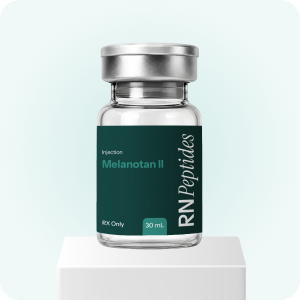
Melanotan II (Injectable)
- Injectable format listed in the supplier catalog
- Individual review of your health history and goals
- Clear confirmation of formulation, availability, and full pricing
- Prescription required, with licensed nurse practitioner review
A clinician must assess evidence, risks, eligibility, and availability before any treatment decision. Review all applicable fees and terms before you place an order. The How Ordering Works page walks through each step.
Sources
- FDA, Certain Bulk Drug Substances for Use in Compounding That May Present Significant Safety Risks (content current April 22, 2026)
- Evaluation of melanotan-II, a superpotent cyclic melanotropic peptide, in a pilot phase-I clinical study (1996)
- Hjuler KF, et al. Melanoma associated with the use of melanotan-II. Journal of the American Academy of Dermatology, 2014
- Sivyer GW, et al. Change in melanocytic lesions induced by melanotan. Case Reports in Dermatological Medicine, 2013
- Cardones AR, Grichnik JM. Case report on pigmented-lesion changes after melanocortin tanning injections. Archives of Dermatology, 2009
- Cousen P, et al. Case report on melanocytic changes after melanotan injections. British Journal of Dermatology, 2009
- Priapism report (PubMed record cited by Westlake Dermatology)
- UNSW Newsroom, What is Melanotan-II, the drug that the TGA urges consumers to avoid (January 30, 2023)
- Synthetic melanotropic peptide initiates erections in men with psychogenic erectile dysfunction, double-blind placebo-controlled crossover study
- Erectogenic properties of melanotan II in men with organic erectile dysfunction
- Lan, Ugwu, et al. Preformulation studies with melanotan II. Journal of Pharmaceutical Sciences, 1994
This article offers education alongside, not in place of, medical advice. Talk with a qualified clinician about your health history before any treatment decision.