

Gonadorelin is the master signal of the reproductive hormone axis, made in a lab. It has a long clinical history as an approved diagnostic and fertility medicine. Today it also draws interest in men’s hormone and fertility care.
You’ll see how gonadorelin works and what the research measured. You’ll also see how it compares with hCG and testosterone. You’ll learn how to prepare for a clinician visit. The safety sections hold the full regulatory picture and the research limits.
The Quick Answer. Gonadorelin is a synthetic version of GnRH, the hormone the hypothalamus releases. GnRH causes the pituitary gland to release LH and FSH. Clinicians have used gonadorelin to test the hypothalamus and pituitary and to induce ovulation. The safety sections cover its regulatory status and the research limits in full.
Gonadorelin at a Glance
This snapshot covers the essentials. Each row points to a section below.
| Item | Snapshot |
| Type | Synthetic decapeptide, identical to natural GnRH |
| Action | Signals the pituitary to release LH and FSH |
| Past Approved Products | Factrel for testing and Lutrepulse for fertility |
| Main Research | Pulsatile therapy in men with hypogonadotropic hypogonadism |
| Hormone Pathway Position | Early, at the top of the axis |
| Delivery Studied | Pulsatile pump and injection |
What Is Gonadorelin?
Gonadorelin is a decapeptide, a chain of 10 amino acids. It’s the same as gonadotropin-releasing hormone that the hypothalamus naturally releases. Because it matches the natural hormone, clinicians use it to probe how the axis works.
How Gonadorelin Works
The reproductive axis follows a short chain of events.
- Gonadorelin signals the pituitary gland.
- The pituitary releases LH and FSH.
- In men, LH signals testicular cells that make testosterone.
- FSH is involved in sperm development.
LH and FSH control development in children and fertility in adults. Gonadorelin works near the beginning of this pathway. It leaves testosterone production to the body’s own pathway.
A Long History of Approved Use
Gonadorelin has a real place in medical history. This table shows its approved roles.
| Use | Product | What It Did |
| Pituitary Testing | Factrel, a diagnostic product approved under an NDA | Tested hypothalamus and pituitary function |
| Ovulation Induction | Lutrepulse, a pulsatile therapy kit | Induced ovulation in hypothalamic amenorrhea |
The test evaluates how well the hypothalamus and pituitary work. The fertility use helps women whose hypothalamus releases too little GnRH. Both uses rest on the same simple mechanism.
Why Pulsatile Delivery Matters
The body releases GnRH in pulses. Researchers copy that rhythm with small pumps. One study compared a pulsatile gonadorelin pump with cyclical gonadotropin therapy.
Pulsatile delivery explains why gonadorelin studies often look different from simple injection studies. The pattern of delivery shapes the response.
What Research Shows in Congenital Hypogonadotropic Hypogonadism
Congenital hypogonadotropic hypogonadism, or CHH, is a condition where the brain sends too little GnRH. It’s where gonadorelin research is strongest.
A study enrolled 28 azoospermic men with CHH. Spermatogenesis came earlier with the pulsatile gonadorelin pump, at a median of 6 months versus 14. It occurred in 90 percent of the pump group and 83.3 percent of the comparison group. Read the 2019 pump study.
A meta-analysis found GnRH therapy was related to larger testicular volume and earlier spermatogenesis. Spermatogenesis rate, sperm concentration, and pregnancy rate were similar to gonadotropin therapy. Gonadotropin therapy was linked to more gynecomastia and acne. See the 2021 meta-analysis.
A 2025 comparison found pulsatile GnRH similar to hCG/HMG therapy in inducing spermatogenesis. A systematic review of gonadotropins for pubertal induction in males found convincing evidence of efficacy.
Gonadorelin in Women’s Health
Gonadorelin’s fertility history includes women. Pulsatile gonadorelin helped induce ovulation in women with irregular ovulation. Their hypothalamus released too little GnRH. That use shows the same principle in a different patient group.
Women using it for fertility follow a doctor’s advice on timing. A reproductive specialist guides each step.
Gonadorelin and Testosterone Therapy
Testosterone replacement supplies testosterone directly. The body’s hypothalamus and pituitary adjust their signals as testosterone rises. Gonadorelin works earlier in the pathway, which is why clinicians discuss it alongside hormone care.
Men with fertility goals should discuss them with a provider before starting hormone care. The safety section covers the research for this use.
Gonadorelin, hCG, and Testosterone
This table lines up the three options men often compare.
| Option | Where It Acts | What to Know |
| Gonadorelin | Signals the pituitary | A formerly approved GnRH product |
| hCG | Acts further down the pathway | Available only as approved biologic products |
| Testosterone | Supplies the hormone directly | Raises levels without signaling the pituitary |
Gonadorelin works near the beginning of the pathway, and testosterone replacement works farther along. Each option has its own evidence and its own place.
Reading a Hormone Panel
Labs tell the story of the axis. LH and FSH show how strongly the pituitary signals. Testosterone and estradiol show how the gonads respond. Clinicians read the four together, along with symptoms and goals.
That pattern helps a clinician match an approach to each person.
Gonadorelin Research Timeline
This table lines up the key studies.
| Year | Milestone |
| 1993 | Schopohl compares pulsatile GnRH with hCG/HMG in 36 men with CHH |
| 2019 | A 28-man study compares a pulsatile gonadorelin pump with gonadotropins |
| 2021 | A meta-analysis compares GnRH therapy with gonadotropin therapy |
| 2023 | A systematic review examines gonadotropins for pubertal induction |
| 2025 | A comparison study finds similar spermatogenesis induction |
Gonadorelin Research by Goal
This table matches each goal to its evidence.
| Goal | Evidence Type | What You Can Say |
| Pituitary Function Testing | Established clinical use | A formerly approved diagnostic |
| Ovulation Induction | Pulsatile therapy, formerly approved | A formerly approved use |
| Spermatogenesis in CHH | Comparative studies and meta-analyses | Earlier spermatogenesis reported |
| Axis Support During Testosterone Therapy | Small studies | Covered in the safety section |
Forms and Routes, Why They Matter
Clinical gonadorelin was given by intravenous or subcutaneous injection. A compounding pharmacy lists a subcutaneous or intramuscular injection. This table shows what to ask.
| Form | Research Context | What to Ask |
| Pulsatile Pump | The CHH studies | Who manages the pump and schedule? |
| Single Injection | The diagnostic use | Which indication does it serve? |
| Compounded Vial | Marketed by pharmacies | Which pharmacy prepares it, and how is it tested? |
Each form has its own evidence. Match the product to the study.
How to Read Gonadorelin Claims
Testosterone and fertility claims deserve careful questions. Use this list.
- Does the claim cite a study in men with CHH or in men on testosterone therapy?
- Was the delivery pulsatile or a single injection?
- How many people took part?
- Which outcome did researchers measure?
- Who sells the product, and who dispensed it?
A study in men with CHH describes those men. Other groups call for their own studies.
Building the Foundation
Hormonal health responds to the basics. Regular sleep, strength training, a healthy weight, and moderate alcohol use support the reproductive axis. Stress management and regular checkups round out the plan.
A clinician can tailor each habit to your life. Those habits shape results with any plan you choose.
Who Should Talk With a Clinician About Hormonal Health?
An evaluation helps most when your goals are specific.
- Adults with symptoms of low testosterone. Testing comes first.
- Men with current or future fertility goals. A clinician can plan around those goals.
- Women with irregular cycles. An evaluation can look for the cause.
- Athletes who want to protect their eligibility. An anti-doping resource gives current rules.
Tracking Your Progress
Good tracking beats good guesses. A symptom diary captures energy, mood, libido, and sleep. Clinicians order the labs that fit your plan. Your clinician sets your schedule.
- A weekly note on energy, mood, and libido.
- Labs your clinician orders, such as LH, FSH, and testosterone.
- A semen analysis if fertility is a goal.
- Medicine changes and start dates.
Choosing a Provider and Pharmacy
Good providers answer these questions clearly.
- Which approaches fit my goals and history?
- Which pharmacy prepares or dispenses the product?
- What licensed clinician oversight is involved?
- How often is follow-up scheduled?
- How are side effects managed?
Verify each clinician’s license with the Texas boards. Verify the pharmacy’s license with the Texas State Board of Pharmacy. Ask for the answers in writing.
Documents to Request
Good documentation answers practical questions. Look for these items on your label and paperwork.
- The exact product name and form.
- The preparing pharmacy’s name and license.
- A lot number and a beyond-use date.
- Storage instructions for your exact product.
- Testing documents from the pharmacy or manufacturer.
One pharmacy lists refrigerated storage, protected from light. Follow your pharmacy label for your exact product.
Questions to Bring to Your Clinician
Walk into the appointment with your questions written down.
- What’s my goal, and what approaches fit it?
- What does the evidence show for gonadorelin in my situation?
- Which exact form and schedule are we discussing?
- Which pharmacy prepares it, and how does it document quality?
- Do my medicines or conditions change the plan?
- How will we measure progress, and when do we reassess?
- What’s the full cost, including labs and follow-up?
A good clinician welcomes these questions.
Gonadorelin Safety Information
This section gathers the safety information in one place. Four parts cover the clinical record, reported effects, precautions, and open questions.
What the Clinical Record Shows
Research on gonadorelin and male fertility has mainly focused on men with specific signaling conditions. Those findings don’t apply to every man with a fertility concern. The potential benefits for men are potential roles, not guaranteed results.
Published literature compares gonadorelin and hCG only to a limited extent. One small, nonrandomized, open-label study assessed both. Evidence for testosterone-therapy support remains limited.
Reported Effects
With repeated doses, check with a doctor immediately for difficulty breathing, continuing flushing, or rapid heartbeat. Hardening of skin at the injection site and hives call for prompt attention.
Single doses can cause stomach discomfort, brief flushing, headaches, lightheadedness, and nausea. Allergic reactions mostly occurred during GnRH therapy in the meta-analysis.
Precautions
A rare GnRH-secreting pituitary adenoma could cause pituitary problems and sudden blindness. Hormone-dependent tumors could worsen with rising hormone levels. Infants may be very sensitive, and use in infants isn’t recommended.
Adequate studies of breastfeeding are lacking, and fertility use can lead to twins or triplets. The medicine list that needs review includes amiodarone, citalopram, clozapine, hydroxychloroquine, and leuprolide. Share your full medicine list with your prescriber. Skip use during pregnancy unless a qualified clinician authorizes it.
What Researchers Are Still Learning
Researchers still need larger controlled trials of gonadorelin during testosterone therapy. They also need long-term fertility outcomes and comparisons with hCG. Quality-tested products and clear dosing studies would fill the gaps.
Gonadorelin Regulatory Status and Product Safety
This section reflects the sources checked as of October 26, 2026. Four parts cover regulatory position, anti-doping status, product quality, and safe use of this guide.
Where Gonadorelin Stands
| Topic | Status as of October 26, 2026 |
| Marketed FDA-Approved Product | None |
| Formerly Approved Products | Factrel and Lutrepulse, both discontinued |
| 503A Compounding | Described as permitted for a component of a formerly approved drug |
| hCG | Available only as approved biologic products |
| Anti-Doping | WADA lists GnRH, gonadorelin, and agonist analogs |
No FDA-approved gonadorelin product is commercially available in the United States. Drugs.com lists Factrel as discontinued. Factrel and Lutrepulse were approved under separate NDAs and were discontinued.
One 2026 analysis says gonadorelin remains compoundable under section 503A. It cites the active ingredient’s past approval. Compounded gonadorelin isn’t equivalent to an FDA-approved drug product. Compounded products aren’t evaluated by FDA for safety, efficacy, or quality.
Ask any provider, including us, for the legal basis, the dispensing pharmacy, and the exact form.
Anti-Doping Status
WADA’s 2026 list includes gonadotrophin-releasing hormone, gonadorelin, and its agonist analogs under S2. A research guide also lists gonadorelin as prohibited under S2. Athletes subject to testing can face sanctions.
Product Quality and Sourcing
Research peptide suppliers also sell gonadorelin as research use only. Those products aren’t approved or quality-controlled for human use. Confirm the exact form, preparing pharmacy, and testing documents before any treatment decision.
What “Research Use Only” Means
Products sold online “for research use only” aren’t approved or quality-controlled for human use. Vendor vials can differ from pharmacy-dispensed products in identity, sterility, and strength. Confirm all three with the dispensing pharmacy.
RN Peptides lists many investigational compounds for discussion only. A listing doesn’t imply approval for human use, and it doesn’t guarantee availability.
How to Use This Guide Safely
This guide is education. It doesn’t provide dosing, reconstitution, or injection instructions. A prescriber sets any dose after an evaluation. Report suspected side effects through FDA’s MedWatch program. Talk with a qualified clinician about your health history before any treatment decision.
Frequently Asked Questions About Gonadorelin
Here are short answers to the most common questions. Each one points back to the detail above.
What Does the Peptide Gonadorelin Do?
It signals the pituitary gland to release LH and FSH. Those hormones drive testosterone and sperm production in men and ovulation in women.
Can Gonadorelin Increase Testosterone?
It supports the body’s own testosterone pathway by prompting LH release. The safety section covers what research shows for each group.
How Often Should I Inject Gonadorelin?
A prescriber sets the schedule after an evaluation. This guide focuses on education.
Which Is Better, Gonadorelin or hCG?
They act at different points in the axis. The safety section covers the comparison evidence. A clinician can weigh both for you.
What Is Gonadorelin?
It’s a synthetic copy of GnRH, a hormone made by the hypothalamus.
Is Gonadorelin the Same as GnRH?
Yes. Gonadorelin is identical to the natural hormone in structure.
Is Gonadorelin the Same as Testosterone?
No. Gonadorelin sends a signal, and testosterone is the hormone itself.
How Does Gonadorelin Differ From Kisspeptin?
Kisspeptin acts upstream and prompts GnRH release. Gonadorelin is GnRH itself.
What Do LH and FSH Do?
In men, LH signals testicular cells that make testosterone, and FSH supports sperm development. In women, they guide ovulation and the cycle.
Does Gonadorelin Affect Estrogen?
LH and FSH prompt the gonads to make sex hormones. Rising estrogen, progestin, or androgen levels matter for hormone-dependent tumors. The safety section covers precautions.
Was Gonadorelin Ever Approved?
Yes. Factrel and Lutrepulse were approved products for testing and fertility.
Does Gonadorelin Help With Fertility?
Studies in men with CHH examined spermatogenesis. The research sections describe the results.
Is Gonadorelin Safe?
The safety section lists reported effects and precautions.
Is Gonadorelin FDA Approved?
The regulatory section lists its position in detail.
Is Gonadorelin Legal in 2026?
The regulatory section explains the compounding picture. Ask any provider for the legal basis.
Is Gonadorelin Banned in Sports?
The regulatory section covers WADA’s 2026 list.
How Is Gonadorelin Dosed?
A prescriber sets the dose after an evaluation. This guide focuses on education.
Where Can I Learn More?
Start with the 2019 pump study and the 2021 meta-analysis.
Talk With RN Peptides About Hormonal Health
If you’re exploring hormonal or fertility questions, our team can talk it through. Bring your history, your medicines, and your questions.
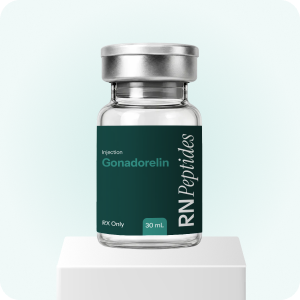
Gonadorelin
- Injectable format listed in the supplier catalog
- Individual review of your health history and goals
- Clear confirmation of formulation, availability, and full pricing
- Prescription required, with licensed nurse practitioner review
A clinician must assess evidence, risks, eligibility, and availability before any treatment decision. Review all applicable fees and terms before you place an order. The How Ordering Works page walks through each step.
Sources
- Zhang L, et al. The pulsatile gonadorelin pump induces earlier spermatogenesis than cyclical gonadotropin therapy in congenital hypogonadotropic hypogonadism men. American Journal of Men’s Health, 2019
- Wei C, et al. Spermatogenesis of male patients with congenital hypogonadotropic hypogonadism receiving pulsatile GnRH therapy versus gonadotropin therapy, meta-analysis. World Journal of Men’s Health, 2021
- Alexander EC, et al. Gonadotropins for pubertal induction in males with hypogonadotropic hypogonadism, systematic review and meta-analysis
- WADA 2026 Prohibited List, S2 overview (DSHS Cologne)
- WADA, Prohibited List
- Pulsatile GnRH versus hCG/HMG in spermatogenesis induction, Reproductive Biology and Endocrinology, 2025
- FDA, Drugs@FDA records for Factrel (NDA 018123) and Lutrepulse (NDA 019687)
This article offers education alongside, not in place of, medical advice. Talk with a qualified clinician about your health history before any treatment decision.