

BPC-157 shows up in locker rooms, recovery clinics, and social feeds. The buzz moves fast, and the research moves slower. In 2026, the story changed twice. FDA moved BPC-157 off its Category 2 list in April, and an advisory committee voted on it in July.
This guide gives you the full picture as of October 20, 2026. You’ll see what BPC-157 is, what studies found, and where FDA stands. You’ll also get direct answers to the four questions Google users ask most.
The Quick Answer. BPC-157 (Body Protection Compound-157) is a synthetic peptide of 15 amino acids, based on a protein fragment found in human gastric juice. Most research comes from animal studies. In July 2026, an FDA advisory committee voted 8 to 6 to recommend it for the compounding bulks list. FDA’s decision is still pending.
BPC-157 at a Glance
This snapshot covers the essentials. Each row points to a section below.
| Item | Snapshot |
| Full Name | Body Protection Compound-157 |
| Type | Synthetic peptide, 15 amino acids |
| Origin | Based on a protein fragment found in human gastric juice |
| Main Research | Animal studies of tendon, muscle, and gut repair |
| Human Research | Five small studies FDA identified, plus a phase 2 hamstring trial |
| Latest FDA Step | July 23, 2026 advisory vote of 8 to 6 in favor |
| Next FDA Step | A formal FDA decision |
| Sport | WADA prohibits it |
What Is BPC-157?
BPC stands for Body Protection Compound. BPC-157 is a pentadecapeptide, a chain of 15 amino acids, that mirrors part of a larger protein in human gastric juice. Researchers at the University of Zagreb first synthesized it in the early 1990s. The finished product is fully synthetic.
FDA notes that BPC-157 free base and BPC-157 acetate are different active ingredients. The exact form matters when you compare products or studies.
What Does BPC-157 Do in the Body?
Researchers describe several proposed actions in cells and animals.
- Blood-vessel growth. BPC-157 affected angiogenesis, the growth of new blood vessels, in preclinical studies.
- Fibroblast activity. It changed how tendon fibroblasts move and respond in laboratory work.
- Growth hormone receptors. In rat tendon cells, it increased growth hormone receptor expression.
- Nitric oxide signaling. It interacts with nitric oxide signaling in animal and laboratory models.
Together, these findings explain the interest in tissue repair. They’re proposed mechanisms, and human trials are testing whether they translate.
What Do Animal Studies Show?
Most of the research is preclinical. A 2025 systematic review included 36 studies, and 35 were preclinical. Rodent studies suggest BPC-157 promoted healing of transected tendons and protected stomach, intestinal, and liver tissue from chemical injury.
In rat Achilles tendon models, treated animals showed better biomechanical outcomes within 10 to 14 days. Muscle crush models showed faster fiber regeneration within one to two weeks. Those results explain why researchers want human trials.
How Researchers Test a Peptide Step by Step
New compounds move through a familiar path. Each step answers a different question.
- Laboratory and animal studies look for a biological signal.
- Early human studies check safety and how the body handles the compound.
- Controlled trials compare the compound with placebo.
- Larger trials confirm the results in more people.
- Regulators review the full package before approval.
BPC-157’s evidence sits mostly at the first step. A few small human studies exist, and a controlled trial is now recruiting. Knowing the step helps you read any claim.
What Human Studies Exist?
Human research is early. FDA identified five clinical studies of BPC-157. This table shows who took part and what they received.
| Study | Who | What They Received |
| Rectal Enema Safety Study | 24 healthy adults | Up to 2 mg/kg daily for 8 days |
| Ulcerative Colitis Trial | About 26 adults given BPC-157 | An 80 mg enema daily for 2 weeks |
| Knee Pain Study | 17 adults | 2 to 4 mg injected into the joint, 1 to 2 doses |
| Interstitial Cystitis Pilot | 12 adults | 10 mg injected into the bladder wall, once |
| Intravenous Safety Pilot | 2 healthy adults | 10 mg, then 20 mg by IV |
In a systematic review of the knee-pain study, 7 of 12 patients who received BPC-157 alone reported relief for more than six months. FDA’s review found that no serious adverse events appear to have been reported in these studies.
What the Hamstring Trial Is Designed to Answer
BPC-HAMSTR is a randomized, double-blind, placebo-controlled phase 2 trial. It tests whether BPC-157 can speed structural healing and functional recovery after an acute grade II hamstring strain. It plans to enroll 120 people and hasn’t posted results.
The design gives clear answers. Adults need acute thigh pain that began within 72 hours, and an MRI must confirm a grade II strain. Participants receive subcutaneous BPC-157 or placebo once daily for 14 days, and everyone follows the same rehabilitation protocol. Matching rehabilitation lets researchers see the effect of the peptide itself.
Does BPC-157 Work Immediately?
No human trial has measured how quickly BPC-157 acts. The timelines you read come from animal studies and personal stories. Some rodent injury models reported changes within one to two weeks.
The hamstring trial will give the first controlled timeline. A simple tracking plan helps you judge any change in the meantime.
What About the Liver?
Researchers have looked at the liver from two angles. In rat models, BPC-157 protected the liver from toxin-induced injury, including damage from the NSAID diclofenac. Human liver studies are still ahead. The safety section covers what FDA noted in animal toxicity studies.
Forms and Routes, Why They Matter
BPC-157 is marketed as capsules, injections, oral sprays, and nasal sprays. Each form needs its own evidence. This table shows what to check.
| Form | What to Check |
| Capsule or Oral Spray | The exact form (free base or acetate), storage, and who prepared it |
| Injection | Concentration, vial strength, sterility, and the preparing pharmacy |
| Nasal or Topical | Whether the research cited used that same route |
| Any Form | A certificate of analysis that confirms identity and testing |
Research on one route doesn’t automatically describe another.
Free Base vs. Acetate, Why the Exact Form Matters
You’ll see two forms on labels. A free base is the peptide in its native form. An acetate is a salt of that same peptide. Both share one active moiety, yet FDA treats them as distinct bulk drug substances. Solubility, stability, and other properties can differ between them.
A clear label names the exact form. So should every study you read and every pharmacy order you review.
Storage and Handling Basics
FDA notes that peptides can be sensitive to heat, moisture, pH, and storage conditions. Those factors can cause aggregation and loss of activity. Your pharmacy label gives the storage and beyond-use instructions for your exact product. Keep them with your supplies and follow them.
How Does BPC-157 Compare With TB-500?
TB-500 is a separate peptide that online protocols often pair with BPC-157. The July committee also recommended TB-500. FDA reported no direct human administration studies for TB-500.
One knee-pain study included patients who also received thymosin beta-4. The other human studies in this guide examined BPC-157 alone.
How to Read Recovery Stories and Online Claims
A useful recovery story includes more than two photos. Use this list to read any claim.
- What was the exact diagnosis and injury grade?
- Which rehabilitation plan did the person follow?
- Which other treatments ran at the same time?
- Which outcome did they measure, such as strength or movement?
- Which form and source of BPC-157 did they use?
Timelines also differ by tissue. A muscle strain, tendon problem, and ligament injury heal on different schedules.
Tracking Your Recovery
Good tracking beats good guesses. Use this checklist if you and your clinician explore any new treatment.
- Rate your pain daily on a simple 1 to 10 scale.
- Measure range of motion the same way each week.
- Record strength, such as repetitions or load.
- Log your activity and rehabilitation sessions.
- Note other treatments and medicine changes.
- Ask whether imaging or labs fit your situation.
BPC-157 has no direct blood marker. The injury assessment shows how the tissue is recovering.
Questions to Bring to Your Clinician
Walk into the appointment with your questions written down. Use this checklist.
- What’s my exact diagnosis, and what established options fit it?
- What does the evidence show for BPC-157 and my injury?
- Which exact form and source are we discussing?
- Which pharmacy prepares it, and how does it document quality?
- How do my medicines and health history fit?
- How will we measure progress?
- When do we reassess or stop?
- What’s the full cost, including follow-up?
A good clinician welcomes these questions.
How to Evaluate a Provider or Pharmacy
Good providers answer these questions clearly. Use this checklist before you decide.
- Verify each clinician’s license with the Texas boards.
- Ask which pharmacy prepares the product, and verify its license with the Texas State Board of Pharmacy.
- Ask for the exact form, free base or acetate.
- Request the certificate of analysis, and ask whether it covers identity, impurities, and endotoxin.
- Get storage and beyond-use instructions in writing.
- Ask how the clinic monitors your response and handles side effects.
- Ask for the legal basis, since FDA’s decision is pending.
A provider who welcomes these questions earns your trust.
BPC-157 Safety Information
This section gathers the safety information in one place. Two parts cover what FDA’s review found and what researchers are still learning.
What FDA’s Review Found
FDA concluded there is insufficient clinical safety information to characterize BPC-157’s safety profile. It found no human pharmacokinetic data for oral, subcutaneous, nasal, or transdermal use.
FDA’s adverse event database had three BPC-157 reports through December 2025. They included injection-site redness and swelling, shortness of breath, and skin and gum darkening after a product labeled for research purposes only. FDA said it can’t draw conclusions from these reports alone.
FDA is concerned about immunogenicity of injectable BPC-157, from peptide aggregation and impurities. It notes that subcutaneous and nasal routes carry more immunogenicity potential than oral or rectal routes.
In 28-day rat and dog studies with intramuscular dosing, FDA noted clotting-time changes and liver-associated signals. Those signals included higher ALT, glucose, and triglyceride levels. Longer studies weren’t available.
Skip use during pregnancy or nursing unless a qualified clinician evaluates and authorizes it. Discuss any history of cancer or unexplained growths, since BPC-157 influences blood-vessel growth. The review also includes reports of shortness of breath and skin or gum color changes. Seek prompt care for trouble breathing, widespread rash, or facial swelling.
What Researchers Are Still Learning
FDA says BPC-157’s molecular targets and mechanisms remain poorly understood. Dose-response relationships haven’t been established. FDA found no carcinogenicity studies.
The 2025 systematic review found no clinical safety data in the musculoskeletal literature. The one musculoskeletal human study was a retrospective chart review with no control group. Long-term human safety is unknown.
BPC-157 Regulatory Status and Product Safety
This section reflects the sources checked as of October 20, 2026. Three parts cover where FDA stands, what the “research use only” label means, and how to use this guide safely.
Where FDA Stands
| Topic | Status as of October 20, 2026 |
| FDA-Approved Use | None |
| Category 2 List | Removed in April 2026 |
| FDA Staff Review | Proposed not adding it to the 503A bulks list |
| Advisory Vote (July 23, 2026) | Recommended adding it, 8 to 6 with 1 abstention |
| Next Step | An FDA decision, which may involve rulemaking |
| WADA | Prohibited |
BPC-157 isn’t a component of an FDA-approved drug, and no country has approved a product containing it. In April 2026, BPC-157 moved off FDA’s active Category 2 table after the nominations were withdrawn.
FDA’s briefing documents proposed not adding BPC-157 to the bulks list. The committee voted 8 to 6, with one abstention, to recommend it. FDA rarely diverges from committee recommendations. The vote didn’t change current federal access rules.
FDA’s briefing says it’s unclear whether pharmacies are currently compounding BPC-157. It also notes that BPC-157 appears in dietary supplement products. Ask any provider, including us, for the legal basis, the dispensing pharmacy, and the exact form.
WADA, the NFL, and the UFC each name BPC-157 in a specific ban, so athletes subject to testing risk sanctions.
What “Research Use Only” Means
FDA found that most certificates of analysis for BPC-157 report purity only. They lack impurity limits and endotoxin testing. FDA also flagged inconsistent naming, with different forms sold under the same name.
A “for research use only” label signals laboratory material, not a product made for people. Vendor vials differ from pharmacy-dispensed products, so confirm identity, sterility, and the exact form. Report suspected side effects through FDA’s MedWatch program.
How to Use This Guide Safely
This guide is education. It doesn’t provide dosing or reconstitution instructions. No standard human dose exists. Talk with a qualified clinician about your health history before any treatment decision.
Frequently Asked Questions About BPC-157
Here are short answers to the most common questions. Each one points back to the detail above.
What Does BPC-157 Do to Your Body?
Researchers propose it affects blood-vessel growth, fibroblast activity, and nitric oxide signaling. Most findings come from animal studies.
What Are the Side Effects of BPC-157?
The safety section lists what FDA’s review found, including adverse event reports.
Is BPC-157 Hard on Your Liver?
Rat studies reported protection against toxin-induced liver injury. The safety section covers FDA’s review of liver-related findings in animal studies.
Does BPC-157 Work Immediately?
No human trial has measured how fast it acts. The hamstring trial will give the first controlled timeline.
What Does BPC-157 Stand For?
BPC stands for Body Protection Compound. The 157 refers to its numbered sequence.
Is BPC-157 FDA Approved?
BPC-157 is an investigational peptide. The regulatory section lists FDA’s current position.
Is BPC-157 Legal in 2026?
An advisory committee recommended it for the compounding bulks list in July. FDA’s decision is pending, so ask any provider for the legal basis.
Has BPC-157 Been Studied in Humans?
Yes, in five small studies FDA identified. A phase 2 hamstring trial is underway.
What Is the BPC-HAMSTR Trial Testing?
It tests whether a 14-day course of subcutaneous BPC-157 speeds healing in adults with MRI-confirmed grade II hamstring strains.
Does BPC-157 Heal Tendons Faster in People?
No human trial has measured that yet. Rat studies reported better tendon outcomes within 10 to 14 days.
What Is the Difference Between BPC-157 Free Base and Acetate?
Both share one active moiety. FDA treats them as distinct substances, so labels and orders should name the exact form.
How Does BPC-157 Compare With TB-500?
They’re separate peptides. The committee reviewed both, and FDA found no direct human administration studies for TB-500.
Is There a Standard BPC-157 Dose?
No standard dose exists, and this guide doesn’t provide one. A clinician sets any dose for your situation.
Can BPC-157 Be Taken by Mouth?
Animal studies tested oral dosing. FDA found no human pharmacokinetic data for oral use.
Is BPC-157 Banned in Sports?
Yes. WADA, the NFL, and the UFC name it in specific bans.
Can I Buy BPC-157 Online?
The regulatory section explains research-use products. A clinician and a licensed pharmacy are the safer route.
Where Can I Learn More?
Start with FDA’s July 2026 briefing document, the 2025 systematic review, and ClinicalTrials.gov.
Talk With RN Peptides About BPC-157
If you’re exploring recovery options, our team can talk through your goals, your history, and your questions. Bring your diagnosis, your medicines, and any treatments you’ve tried.
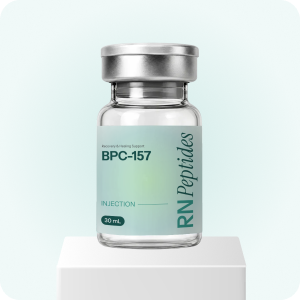
BPC-157
- Reviewed by a licensed nurse practitioner in your state
- Prescription issued only when clinically appropriate
- Approved prescriptions fulfilled by licensed U.S. pharmacy partners
- Nurse support throughout the ordering process
Selecting a product doesn’t guarantee a prescription. Review fees, availability, and medication-specific information with your clinician and at checkout. The How Ordering Works page walks through each step.
Sources
- FDA Briefing Document, Pharmacy Compounding Advisory Committee, July 23 to 24, 2026 (BPC-157 evaluation)
- Vasireddi N, et al. “Emerging Use of BPC-157 in Orthopaedic Sports Medicine: A Systematic Review.” HSS Journal, 2025
- ClinicalTrials.gov, NCT07437547 (BPC-HAMSTR)
- Lee E, Padgett B. “Intra-Articular Injection of BPC 157 for Multiple Types of Knee Pain.” Alternative Therapies in Health and Medicine, 2021
- Lee E, Burgess K. “Safety of Intravenous Infusion of BPC157 in Humans: A Pilot Study.” Alternative Therapies in Health and Medicine, 2025
- McGuire FP, et al. “Regeneration or Risk? A Narrative Review of BPC-157 for Musculoskeletal Healing.” 2025
- McDermott Will & Emery and Orrick analyses of the July 2026 committee meeting
- WADA 2026 Prohibited List
This article offers education alongside, not in place of, medical advice. Talk with a qualified clinician about your health history before any treatment decision.