

DSIP is the sleep peptide with the most memorable name in the field. It has a classic discovery story and a long research record. A 2026 FDA review put it back in the spotlight.
You’ll see how DSIP was discovered and what the studies measured. You’ll also see how to read sleep research and how to prepare for a clinician visit. The safety sections hold the full FDA picture and the trial results.
The Quick Answer. DSIP, also called emideltide, is a nine-amino-acid neuropeptide first isolated from rabbit blood in the 1970s. Researchers named it for the delta waves of deep sleep. Human studies have examined it since 1981, measuring sleep onset, awakenings, and sleep efficiency. The safety sections cover FDA’s 2026 review and the trial results in full.
DSIP at a Glance
This snapshot covers the essentials. Each row points to a section below.
| Item | Snapshot |
| Type | Naturally occurring neuropeptide, nine amino acids |
| Sequence | Trp-Ala-Gly-Gly-Asp-Ala-Ser-Gly-Glu |
| Other Name | Emideltide |
| Discovery | 1970s, Swiss research group |
| Main Research | Animal EEG studies and small human studies |
| Measures Studied | Sleep onset, awakenings, sleep efficiency |
| Latest FDA Step | Advisory committee review on July 24, 2026 |
What Is DSIP?
DSIP stands for delta sleep-inducing peptide. It’s a nonapeptide with the sequence Trp-Ala-Gly-Gly-Asp-Ala-Ser-Gly-Glu. Researchers originally found it in rabbit cerebral venous blood. They synthesized it later.
The Swiss Schoenenberger-Monnier group discovered it in 1974. The name reflects its effect on EEG delta waves, the hallmark of deep sleep.
DSIP and Emideltide, One Peptide
DSIP and emideltide name the same nine-amino-acid peptide. FDA’s review evaluates two forms, the free base and the acetate salt. It treats them as distinct bulk substances. A clear label names the exact form.
How DSIP Is Thought to Work
Researchers describe several proposed actions.
- Brain access. Studies report that DSIP crosses the blood-brain barrier.
- Enkephalin release. DSIP facilitated enkephalin release from neurons in several brain regions.
- Opioid system link. Naloxone blocked DSIP’s sleep-prolonging effect in rats.
- Hormone signaling. In rats, DSIP stimulated luteinizing hormone release.
These actions come from animal and cell studies. Larger human studies will show how they fit together. Read the 2006 review in the Journal of Neurochemistry for a full overview.
What the Animal Studies Show
In rabbits, DSIP raised EEG delta power and spindle activity. In cats and rats, it prolonged non-REM sleep without changing REM duration.
DSIP was active by several routes, including intravenous, subcutaneous, and intraperitoneal. In rats, the delta-wave effect grew with dose. Researchers also reported analgesic, stress-limiting, and anticonvulsant effects in rodents.
What Human Studies Exist?
Human studies began in 1981. This table shows what each one examined.
| Study | Who | What It Examined |
| Schneider-Helmert, 1981 | 6 adults with chronic insomnia | One IV dose before bedtime |
| Schneider-Helmert, 1987 | 14 adults with chronic insomnia | Seven nightly IV doses |
| Bes, 1992 | 16 adults with chronic insomnia | Double-blind sleep-lab study over five nights |
| Monti, 1987 | 6 adults with severe insomnia | Crossover study over nine nights |
| Backmund, 1998 | 7 adults in opioid withdrawal | Open-label IV study |
In the 1981 study, sleep-promoting effects began in hour two. They lasted up to six hours. Participants had fewer interruptions during sleep.
In the 1987 study, average time to fall asleep fell from 58.4 to 27.6 minutes. Time awake after sleep onset fell from 120.8 to 65.6 minutes. Total sleep time rose from 313 to 385 minutes. Daytime performance stayed steady after treatment.
DSIP Research Timeline
This table lines up the key studies.
| Year | Milestone |
| 1974 | The Swiss group discovers DSIP in rabbit blood |
| 1977 | Researchers characterize the natural and synthetic peptide |
| 1981 | The first human study reports effects on disturbed sleep |
| 1984 | A study examines DSIP in opioid and alcohol withdrawal |
| 1987 | A 14-patient study reports sleep and daytime measures |
| 1992 | A double-blind study enrolls 16 patients |
| 1998 | An open-label study examines opioid detoxification |
| 2006 | A review summarizes the field |
| 2026 | FDA publishes its briefing, and the committee votes |
DSIP Research by Goal
This table matches each goal to its evidence.
| Goal | Evidence Type | What You Can Say |
| Sleep Onset | Small human IV studies | Examined since 1981 |
| Sleep Maintenance | Small human IV studies | Awakenings and efficiency measured |
| Stress Response | Rodent studies | Documented in animals |
| Pain | Rodent studies | Analgesic effect in animals |
| Opioid Withdrawal | Two open-label human studies | Early-stage |
| Narcolepsy | One case report | Early-stage |
Sleep Measures Researchers Track
Sleep studies use a shared vocabulary. This table explains the terms you’ll see.
| Measure | What It Means |
| Sleep Onset Latency | Time from lights out to the onset of sleep |
| Total Sleep Time | Minutes asleep during the sleep period |
| Wake After Sleep Onset | Minutes awake after falling asleep |
| Sleep Efficiency | Percentage of time in bed spent asleep |
| Number of Awakenings | Complete awakenings after sleep begins |
Researchers record these measures in a sleep laboratory or with diaries and actigraphy.
Sleep Stages in Plain Language
Delta waves are slow, high-amplitude EEG waves that prevail during the deepest stage of non-REM sleep. Spindles are short bursts that prevail during a lighter stage. Studies suggest both play a key role in memory consolidation.
That’s why researchers describe sleep with EEG recordings and not just clocks.
DSIP and Body Temperature Rhythms
In rats, a single DSIP injection shifted the daily rhythm of body temperature. Researchers continue to explore how temperature, sleep, and circadian timing connect.
Forms and Routes, Why They Matter
The human studies used intravenous dosing. Clinics market DSIP as injections and nasal sprays. This table shows what to ask.
| Form | Research Context | What to Ask |
| Intravenous | The route in the human studies | Who administers it, and why? |
| Subcutaneous Injection | Marketed by clinics | Which evidence covers this route? |
| Nasal Spray | Marketed by clinics | Which evidence covers this route? |
Each route has its own evidence. Match the product to the study.
How to Read DSIP Claims
Sleep claims deserve careful questions. Use this list.
- Does the claim cite a human study, an animal study, or a seller’s page?
- Which route did the study use?
- How many people took part?
- Which sleep measure did researchers track?
- Who sells the product, and who dispensed it?
A rabbit’s EEG result describes a rabbit. A lab-measured result describes how a person slept that night.
Building a Restful Foundation
The American College of Physicians recommends cognitive behavioral therapy as the initial treatment for chronic insomnia. Steady sleep and wake times support the same goal. So do a dark, cool bedroom and a wind-down routine.
A clinician or sleep specialist can tailor each habit to your life. Those habits shape results with any plan you choose.
Who Should Talk With a Clinician About Sleep?
An evaluation helps most when your goals are specific.
- Adults who struggle to fall asleep or stay asleep. A clinician can look for treatable causes.
- People who wake unrefreshed. A sleep evaluation can check for breathing-related and other causes.
- Adults curious about sleep peptides. A guide like this one helps frame the questions.
- People who want a plan that includes behavioral tools. A clinician can coordinate all of it.
Tracking Your Progress
Good tracking beats good guesses. A sleep diary captures bedtime, wake time, awakenings, and how rested you feel. Your clinician may add a questionnaire or a sleep study. Your clinician sets your schedule.
- A nightly sleep diary.
- A morning note on how rested you feel.
- Medicine changes and start dates.
- Notes on caffeine, alcohol, and screen time.
Choosing a Provider and Pharmacy
Good providers answer these questions clearly.
- Which approaches fit my sleep goals and history?
- Which pharmacy prepares or dispenses the product?
- What licensed clinician oversight is involved?
- How often is follow-up scheduled?
- How are side effects managed?
Verify each clinician’s license with the Texas boards. Verify the pharmacy’s license with the Texas State Board of Pharmacy. Ask for the answers in writing.
Documents to Request
Good documentation answers practical questions. Look for these items on your label and paperwork.
- The exact peptide name and form, free base or acetate.
- The preparing pharmacy’s name and license.
- A lot number and a beyond-use date.
- Storage instructions for your exact product.
- Testing documents from the pharmacy or manufacturer.
Peptides generally keep best when stored cold. Follow your pharmacy label for your exact product.
Questions to Bring to Your Clinician
Walk into the appointment with your questions written down.
- What’s my sleep goal, and what approaches fit it?
- What does the evidence show for DSIP?
- Which exact form and route are we discussing?
- Which pharmacy prepares it, and how does it document quality?
- Do my medicines or conditions change the plan?
- How will we measure progress, and when do we reassess?
- What’s the full cost, including follow-up?
A good clinician welcomes these questions.
DSIP Safety Information
This section gathers the safety information in one place. Three parts cover the clinical record, what FDA’s review found, and what researchers are still learning.
What the Clinical Record Shows
FDA’s briefing document on emideltide reviewed the human studies. FDA found no study of the subcutaneous route and only intravenous data. It concluded that the evidence is insufficient for chronic insomnia, narcolepsy, and opioid withdrawal.
In the 16-patient double-blind study, authors reported at best weak effects. There were no significant differences in objective sleep measures or subjective sleep quality. The 1987 study compared participants with an external control group and had no placebo arm. The narcolepsy report covered a single patient.
The opioid withdrawal studies were open-label and small. FDA found no information on long-term benefit.
What FDA’s Review Found
Emideltide isn’t a United States Adopted Name, and FDA found inconsistent naming across sources. One nomination’s certificate listed a formula that matches no emideltide structure. Certificates lacked impurity limits, aggregate tests, and endotoxin tests.
FDA is concerned about immunogenicity for subcutaneous injection. The free base also has limited water solubility, which complicates a 1 mg/mL injection. Emideltide’s half-life is only minutes.
FDA found no studies of abuse potential. Because DSIP may stimulate endorphin release, FDA noted a theoretical reinforcing risk. In rats, DSIP lowered heart rate by about 3 to 10 percent. FDA found no repeat-dose, genotoxicity, or reproductive studies.
Medicines, Pregnancy, and Other Precautions
FDA noted that drugs that inhibit dipeptidase, such as captopril, could raise DSIP levels. Anyone taking blood-pressure medicine should talk with the prescriber first.
Skip use during pregnancy, while nursing, or under age 18 unless a qualified clinician authorizes it. Discuss persistent insomnia, breathing-related sleep concerns, and daytime sleepiness with a qualified clinician. Seek prompt care for chest pain, fainting, hives, or trouble breathing.
What Researchers Are Still Learning
Researchers haven’t yet found a DSIP gene in rabbits or any receptor, and studies on sleep have been contradictory. FDA also noted inconsistent animal findings on sleep architecture. Larger placebo-controlled trials, long-term data, and comparisons of routes would help.
DSIP Regulatory Status and Product Safety
This section reflects the sources checked as of October 26, 2026. Four parts cover FDA’s position, product quality, the research-use label, and safe use of this guide.
Where FDA Stands
| Topic | Status as of October 26, 2026 |
| FDA-Approved Use | None |
| Part of an Approved Drug | No |
| USP Drug Monograph | None |
| FDA Staff Review (May 2026) | Criteria weighed against listing |
| Advisory Vote (July 24, 2026) | 6 yes, 7 no, 1 abstention |
| Evaluated Uses | Opioid withdrawal, chronic insomnia, narcolepsy |
| 503A Bulks List | Not added |
| Final FDA Decision | Not made |
FDA’s review found that no form of emideltide is part of an approved drug. No USP monograph covers it. FDA concluded that the evaluation criteria weigh against listing.
The committee voted against recommending emideltide for the 503A bulks list. The vote was 6 yes, 7 no, and 1 abstention. The vote was advisory, and FDA hasn’t made a final decision. Current access rules remain unchanged. See FDA’s July 2026 meeting page.
FDA’s compounding safety page lists emideltide among substances nominated but withdrawn. It cites immunogenicity risk and says FDA lacks safety information for the proposed route. Read the FDA safety page.
No outsourcing facility has reported compounding emideltide. FDA searched and found it isn’t a registered drug in any country it checked.
Ask any provider, including us, for the legal basis, the dispensing pharmacy, and the exact form.
Product Quality and Marketing
FDA found clinics, medical spas, and online retailers marketing emideltide as injections and nasal sprays. They advertise it for sleep, stress, pain, cancer, and addiction detoxification. None of the websites FDA checked said whether the product was a base or a salt.
Confirm the exact form, preparing pharmacy, and testing documents before any treatment decision.
What “Research Use Only” Means
Products sold online “for research use only” aren’t approved or quality-controlled for human use. Vendor vials can differ from pharmacy-dispensed products in identity, sterility, and strength. Confirm all three with the dispensing pharmacy.
RN Peptides lists many investigational compounds for discussion only. A listing doesn’t imply approval for human use, and it doesn’t guarantee availability.
How to Use This Guide Safely
This guide is education. It doesn’t provide dosing, reconstitution, or injection instructions. A prescriber sets any dose after an evaluation. Report suspected side effects through FDA’s MedWatch program. Talk with a qualified clinician about your health history before any treatment decision.
Frequently Asked Questions About DSIP
Here are short answers to the most common questions. Each one points back to the detail above.
What Are the Benefits of DSIP Peptide?
Researchers measured sleep onset, awakenings, and sleep efficiency. The research sections show each study, and the safety section covers how the studies compare.
How Long Does It Take for DSIP to Kick In?
In the 1981 study, sleep-promoting effects began in the second hour after an IV dose. Human timing data come from the intravenous studies.
How Does DSIP Make You Feel?
Participants in the 1987 study reported higher activation, concentration, and well-being. Individual experiences vary. The safety section covers precautions.
What Are the Side Effects of DSIP?
The safety section lists what FDA’s review found.
What Does DSIP Stand For?
DSIP stands for delta sleep-inducing peptide. The name refers to the delta waves of deep sleep.
Is DSIP the Same as Emideltide?
Yes. Emideltide is the name used in FDA’s review. The review covers the free base and the acetate salt.
Is DSIP a Natural Peptide?
Yes. Researchers first found it in rabbit blood, and the same sequence is made synthetically.
How Does DSIP Work?
Researchers propose actions on enkephalin release and the opioid system. The mechanism section lists the studies.
Does DSIP Help With Opioid Withdrawal?
Two open-label human studies examined it. The safety section covers FDA’s conclusions.
Does DSIP Raise Testosterone?
Rat studies examined luteinizing hormone release. The human sleep studies measured sleep outcomes.
Is DSIP FDA Approved?
The regulatory section lists FDA’s position in detail.
Is DSIP Legal in 2026?
The regulatory section explains compounding status and sourcing. Ask any provider for the legal basis.
How Is DSIP Dosed?
A prescriber sets the dose after an evaluation. This guide focuses on education.
Can DSIP Be Combined With Other Peptides?
Clinics market combinations. The studies in this guide examined DSIP alone.
Where Can I Learn More?
Start with FDA’s emideltide briefing and the 1992 double-blind study in Neuropsychobiology.
Talk With RN Peptides About Sleep
If you’re exploring sleep questions, our team can talk it through. Bring your routine, your history, and your questions.
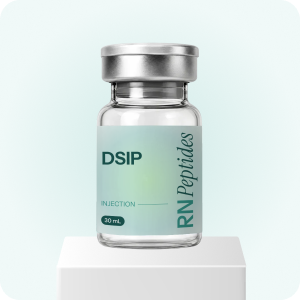
DSIP
- A personal starting point for your questions
- Clear ingredient and formulation details
- Supporting sources you can explore
- One team to ask about availability
Your clinician determines whether a prescription is appropriate. Review all applicable fees and terms before you place an order. The How Ordering Works page walks through each step.
Sources
- FDA, Briefing Document on Emideltide-Related Bulk Drug Substances, Pharmacy Compounding Advisory Committee (July 23 to 24, 2026)
- FDA, July 23 to 24, 2026 Pharmacy Compounding Advisory Committee meeting page
- FDA, Certain Bulk Drug Substances for Use in Compounding That May Present Significant Safety Risks (content current April 22, 2026)
- Bes F, et al. Effects of delta sleep-inducing peptide on sleep of chronic insomniac patients. A double-blind study. Neuropsychobiology, 1992
- Schneider-Helmert D, Schoenenberger GA. The influence of synthetic DSIP on disturbed human sleep. Experientia, 1981
- Backmund M, et al. Opioid detoxification with delta sleep-inducing peptide, open clinical trial. Journal of Clinical Psychopharmacology, 1998
- Kovalzon VM, Strekalova TV. Delta sleep-inducing peptide (DSIP), a still unresolved riddle. Journal of Neurochemistry, 2006
- Pollard BJ, Pomfrett CJ. Delta sleep-inducing peptide. European Journal of Anaesthesiology, 2001
- Monnier M, et al. The delta sleep inducing peptide (DSIP), comparative properties of the original and synthetic nonapeptide. Experientia, 1977
- Schneider-Helmert D. DSIP in chronic insomnia, 14-patient study (1987)
- Monti JM, et al. Delta sleep-inducing peptide in severe chronic insomnia (1987)
This article offers education alongside, not in place of, medical advice. Talk with a qualified clinician about your health history before any treatment decision.