

Semax is the peptide that nootropic forums can’t stop discussing. It has a real clinical history in Russia and a tidy mechanism story. Its record in the United States is thin.
You’ll see how Semax works and what studies exist. You’ll also see where FDA stands and how to prepare for a clinician visit. You’ll get direct answers to the questions Google users ask most.
The Quick Answer. Semax is a synthetic peptide of seven amino acids, modeled on a fragment of ACTH. Russia registers it as a drug, sold as nasal drops. In the United States it remains investigational. An FDA advisory committee voted 8 to 5 in July 2026 to recommend it. The vote concerned the compounding list. FDA’s final decision is pending.
Semax at a Glance
This snapshot covers the essentials. Each row points to a section below.
| Item | Snapshot |
| Type | Synthetic heptapeptide |
| Sequence | Met-Glu-His-Phe-Pro-Gly-Pro |
| Origin | An analog of the ACTH 4-10 fragment |
| Russian Status | Registered drug, 0.1% and 1% nasal drops |
| Main Research | Rodent models and small human studies |
| FDA Advisory Vote | 8 to 5 in favor on July 24, 2026 |
| Next FDA Step | A final FDA decision |
What Is Semax?
Semax is a heptapeptide, a chain of seven amino acids. The name comes from the Russian words for seven amino acids. It’s a synthetic analog of a fragment of adrenocorticotropic hormone. FDA’s review cites a 1984 report of its synthesis.
Semax lacks the corticotropic and melanotropic effects of the full hormone. That means it doesn’t act like ACTH on the adrenal glands. Semax is a registered drug in Russia, sold as nasal drops.
How Semax Is Thought to Work
The structure helps explain the interest. Semax combines an ACTH 4-7 fragment with a Pro-Gly-Pro tail. That tail is thought to protect it from peptidases. Researchers describe several proposed actions.
- Nerve growth factors. In rats, nasal Semax raised BDNF and nerve growth factor expression within 60 minutes.
- Gene expression after injury. In a rat stroke model, Semax shifted immune and blood-vessel genes.
- Serotonin and dopamine. In rodents, Semax activated both systems.
- Enzyme inhibition. In lab tests, Semax inhibited enkephalinases, enzymes that break down natural opioids.
These are proposed mechanisms from animal and lab work. Human trials haven’t confirmed them.
What the Animal Studies Show
In a rat model of focal stroke, infarcts were about 20 percent smaller with Semax. Treated rats also kept their memory in a passive avoidance task. In global ischemia, Semax reduced ischemic damage in several brain regions.
A genome-wide study looked at rat brain tissue after a stroke. Semax changed the expression of 96 genes at three hours and 68 genes at 24 hours. Immune genes made up over half of the altered genes at 24 hours. Genes tied to blood-vessel development also changed.
In rats, a larger share of an intranasal dose reached the brain than an IV dose. That finding explains why Russian products use the nasal route.
What Human Studies Exist?
Human research is small, and much of it is hard to access. This table shows what FDA’s review describes.
| Setting | Who | What It Examined |
| Pain Study (1996) | 37 adults with migraine, trigeminal neuralgia, or dental plexalgia | A single nasal dose, with no control group |
| Healthy-Volunteer Studies | About 33 to 47 healthy adults | Nasal dosing, including brain imaging in 14 adults |
| Chronic Ischemic Brain Disease | An unstated number of adults | One meeting abstract |
| Peptic Ulcer | 32 adults | Semax added to standard therapy |
| Pediatric Studies | 451 children with depression or tics | Semax combined with other therapies |
FDA tallied about 33 to 47 healthy adults and 69 adults with conditions. It also counted 451 children. It found no literature on subcutaneous injection in people. The only route discussed in the studies was intranasal.
Semax Research Timeline
This table lines up the key studies and decisions.
| Year | Milestone |
| 1984 | A report describes the synthesis of Semax |
| 1991 | A rat study examines how blood enzymes break Semax down |
| 1996 | A small study tests nasal Semax in migraine and facial pain |
| 2006 | Rat studies link Semax to BDNF and its receptor |
| 2014 | A genome-wide study maps gene changes after rat stroke |
| 2018 | An imaging study tests nasal Semax in healthy adults |
| 2026 | FDA publishes its briefing, and the committee votes |
Semax Research by Goal
This table matches each goal to its evidence.
| Goal | Evidence Type | What You Can Say |
| Stroke and Ischemia | Rodent models, plus Russian clinical work | Promising in animals, awaiting accessible trials |
| Focus and Memory in Healthy Adults | A small imaging study | Awaiting controlled performance trials |
| Migraine and Trigeminal Neuralgia | One small open-label study | Early-stage |
| Depression and Anxiety | Rodent models and pediatric abstracts | Early-stage |
| ADHD | No supporting literature found by FDA | Not studied |
Why the Nasal Route Matters
Peptides break down fast in the body. Semax is quickly hydrolyzed in rat blood and brain tissue. Its main breakdown product is the tripeptide Pro-Gly-Pro.
In rats, about 0.07 percent of a nasal dose reached the brain. An IV dose delivered 0.005 percent. Those are rat figures. They don’t tell you what a human spray delivers.
Semax, ADHD, and Stimulants
Two questions come up often. Is Semax used for ADHD? What peptide is similar to Adderall?
Semax was nominated for ADHD. FDA didn’t evaluate that use because it found no supporting literature. Semax isn’t a stimulant. No peptide is an established substitute for a prescription stimulant. A clinician can discuss ADHD options that have evidence.
Semax vs. Selank vs. N-Acetyl Semax
These names get mixed up. This table clears up the differences.
| Name | What It Is | Key Point |
| Semax | An ACTH-derived heptapeptide | The form most studied |
| Semax Acetate | A salt of Semax | FDA treats it as a different active ingredient. |
| N-Acetyl Semax | A chemically modified version | Safety and dosing data don’t transfer from Semax. |
| Selank | A separate Russian peptide | It’s usually explored for anxiety, not cognition. |
A clear label names the exact form.
Forms and Routes, Why They Matter
Compounders market Semax as nasal sprays and injections, alone or combined with Selank. The human studies used the nasal route. This table shows what to ask.
| Form | Research Context | What to Ask |
| Nasal Spray or Drops | The route in the human studies | Which device and which concentration? |
| Subcutaneous Injection | No human data identified | Who prepared it, and how is sterility tested? |
| Combination Products | No human data identified | What evidence covers that pairing? |
FDA noted that its nasal spray proposals lacked any device information. Delivery hardware shapes what a spray actually delivers.
How to Read Nootropic Claims
Cognitive claims deserve careful questions. Use this list.
- Did the study enroll healthy adults or patients?
- Which outcome did researchers measure?
- Was there a control group?
- Which form and route did the study use?
- Who sells the product, and who dispensed it?
A brain-imaging change isn’t the same as a better workday. A 14-person imaging study can’t establish a workplace benefit. Match each claim to the setting where researchers tested it.
Who Should Talk With a Clinician About Semax?
An evaluation helps most when a specific symptom is the real question.
- Adults with memory or focus concerns. A workup can find treatable causes.
- People with migraine or facial pain. Established treatments exist.
- People taking blood thinners or with bleeding risk. Individual review matters most.
- People who are pregnant or nursing. Review any new compound first.
- Drug-tested athletes. Check current anti-doping rules first.
Tracking Your Experience
Good tracking beats good guesses. Semax has no single direct biomarker. Common practice tests a metabolic panel at baseline and again at four to six weeks. Your clinician sets your schedule.
- A daily note on focus, sleep, and mood.
- Headache days and nasal comfort.
- Medicine changes and start dates.
- Any bleeding or bruising changes.
Choosing a Provider and Pharmacy
Good providers answer these questions clearly.
- Which pharmacy prepares the product?
- Which exact form is it, and by which route?
- What licensed clinician oversight is involved?
- How often is follow-up scheduled?
- How are side effects managed?
Verify each clinician’s license with the Texas boards. Verify the pharmacy’s license with the Texas State Board of Pharmacy. Ask for the answers in writing.
Checking Product Quality and Documentation
Naming and testing matter for peptides. FDA found that certificates of analysis for Semax lack aggregate, endotoxin, and microbial testing. In both nominations, the certificate named one form and listed the other form’s formula. Look for these items.
- The exact form on the label.
- The preparing pharmacy’s name and license.
- A lot number and a beyond-use date.
- Storage instructions for your exact product.
- A certificate covering identity, impurities, and endotoxin testing.
Peptides can be sensitive to pH, heat, and storage conditions. Follow your pharmacy label for your exact product.
Questions to Bring to Your Clinician
Walk into the appointment with your questions written down.
- What’s my goal, and what established options fit it?
- What does the evidence show for Semax?
- Which exact form and route are we discussing?
- Which pharmacy prepares it, and how does it document quality?
- Do my medicines or conditions change the plan?
- How will we measure progress, and when do we reassess?
- What’s the full cost, including follow-up?
A good clinician welcomes these questions.
Semax Safety Information
This section gathers the safety information in one place. Two parts cover what FDA’s review found and what researchers are still learning.
What FDA’s Review Found
FDA found no pharmacokinetic studies of Semax in people by any route. It found no safety data for subcutaneous injection. Most human studies didn’t report adverse events.
FDA’s adverse event database held one report through December 3, 2025. A consumer described eye pain and burning after using Semax nasal drops bought online. She was hospitalized, and the pain hadn’t resolved when she reported it.
Rat studies showed anticoagulant and antithrombotic effects, which raises a bleeding concern. FDA flagged that risk for people prone to bleeding or taking medicines that raise it.
FDA also raised immunogenicity and aggregation concerns, and nasal or subcutaneous routes raise immune concerns more. In mice, Semax boosted amphetamine-induced dopamine release in the striatum. FDA found no studies of Semax’s abuse potential.
Skip use during pregnancy or nursing unless a qualified clinician authorizes it. FDA found no reproductive toxicity studies. People with neurological, psychiatric, cardiovascular, liver, kidney, autoimmune, or endocrine conditions need medical guidance first.
What Researchers Are Still Learning
FDA found insufficient evidence of effectiveness for cerebral ischemia, migraine, or trigeminal neuralgia. In the one pain study, most migraine patients kept some pain. Typical trigeminal neuralgia patients saw no change.
FDA says Semax acts through poorly understood mechanisms. Dose-response relationships haven’t been established for any route. The only cancer study tested a fixed dose in mice and wasn’t adequately designed. Several human studies combined Semax with other treatments, so its own contribution is hard to separate.
Semax Regulatory Status and Product Safety
This section reflects the sources checked as of October 22, 2026. Three parts cover FDA’s position, the research-use label, and safe use of this guide.
Where FDA Stands
| Topic | Status as of October 22, 2026 |
| FDA-Approved Use | None |
| Part of an Approved Drug | No |
| USP Drug Monograph | None |
| Category 2 List | Removed in April 2026 |
| FDA Staff Review (May 2026) | Proposed not adding it to the 503A bulks list |
| Advisory Vote (July 24, 2026) | 8 yes, 5 no, 1 abstention |
| Russia | Registered drug, 0.1% and 1% nasal drops |
| Anti-Doping | Unapproved substances may fall under WADA’s S0 category |
Semax isn’t a component of an FDA-approved drug, and no USP monograph covers it. FDA removed it from Category 2 in April 2026. The committee voted 8 to 5, with one abstention, to recommend it. FDA’s own scientists had proposed not adding it.
The vote was advisory, and FDA hasn’t made a final decision. Current access rules remain unchanged. No outsourcing facility has reported compounding Semax since 2019.
Ask any provider, including us, for the legal basis, the dispensing pharmacy, and the exact form.
WADA’s S0 category can make any unapproved compound prohibited, so athletes should check current rules.
What “Research Use Only” Means
Products sold online “for research use only” aren’t approved or quality-controlled for human use. None of the sites FDA checked said whether their Semax was a base or a salt. Vendor products can differ from pharmacy-dispensed ones in identity, sterility, and strength. Confirm all three with the dispensing pharmacy.
How to Use This Guide Safely
This guide is education. It doesn’t provide dosing, route, or cycle instructions. A prescriber sets any dose after an evaluation. Report suspected side effects through FDA’s MedWatch program. Talk with a qualified clinician about your health history before any treatment decision.
Frequently Asked Questions About Semax
Here are short answers to the most common questions. Each one points back to the detail above.
What Does Semax Peptide Do to You?
In rodents, it raised nerve growth factors and reduced stroke damage. Human effects are far less clear. The research sections show the evidence by goal.
Who Should Not Take Semax Peptide?
No safe-use group is established. Anyone pregnant or nursing needs clinician review first. So does anyone prone to bleeding or with a chronic condition.
What Peptide Is Similar to Adderall?
No peptide is an established substitute for a prescription stimulant. Semax isn’t a stimulant.
Is Semax Used for ADHD?
FDA found no supporting literature to evaluate that use. Talk with a clinician about options that have evidence.
Is Semax a Peptide?
Yes. It’s a synthetic peptide of seven amino acids.
Is Semax a Nootropic?
Nootropic is a marketing term. FDA noted that it has no ICD-10 code, so it evaluated that use under cerebral ischemia.
Why Is Semax Sold as a Nasal Spray?
The human studies used the nasal route. In rats, a larger share of a nasal dose reached the brain than an IV dose.
Does Semax Have Side Effects?
The safety section lists what FDA found. Most human studies didn’t report adverse events, so the record is incomplete.
Is Semax Safe?
FDA says there is insufficient clinical information to characterize Semax’s safety profile. The safety section lists what FDA found.
Is Semax Approved in Russia?
Russia lists Semax as a registered drug, sold as 0.1% and 1% nasal drops. That status doesn’t carry over to the United States.
Is Semax FDA Approved?
Semax is investigational in the United States. The regulatory section lists FDA’s current position.
Is Semax Legal in 2026?
An advisory committee recommended it for the compounding list in July. FDA’s decision is pending, so ask any provider for the legal basis.
Does Semax Affect Hormones?
It lacks the corticotropic effects of ACTH, according to FDA’s review. Human hormone data are limited.
How Long Does Semax Take to Work?
No human timeline exists. In rats, growth factor expression rose within 60 minutes of a nasal dose.
How Is Semax Dosed?
A prescriber sets the dose after an evaluation. This guide doesn’t provide one.
What Is the Difference Between Semax and N-Acetyl Semax?
N-acetyl Semax is a chemically modified version. Data don’t transfer between the two.
Can Semax Treat Stroke or Migraine?
FDA found insufficient evidence for both uses. Established treatments exist, so talk with a clinician.
Can I Buy Semax Online?
A clinician and a licensed pharmacy are the safer route. The regulatory section explains research-use products.
Where Can I Learn More?
Start with FDA’s July 2026 briefing document and the 2014 rat gene-expression study.
Talk With RN Peptides About Semax
If you’re exploring focus or memory questions, our team can talk it through. Bring your history, your medicines, and your questions.
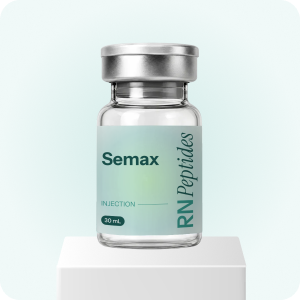
Semax
- Prescription required, with licensed nurse practitioner review
- Formulation and availability confirmed on request
- A product inquiry, with no active checkout
- Supporting sources you can explore
Your clinician determines whether a prescription is appropriate. Review all applicable fees and terms before you place an order. The How Ordering Works page walks through each step.
Sources
- FDA, Briefing Document on Semax-Related Bulk Drug Substances, Pharmacy Compounding Advisory Committee (July 23 to 24, 2026)
- Medvedeva EV, et al. “The peptide semax affects the expression of genes related to the immune and vascular systems in rat brain focal ischemia.” BMC Genomics, 2014
- Koroleva et al. Semax in migraine and trigeminal neuralgia (1996)
- Lebedeva et al. Semax and resting-state brain networks in healthy adults (2018)
- FDA advisory committee vote records, July 2026
- WADA Prohibited List, S0 category
This article offers education alongside, not in place of, medical advice. Talk with a qualified clinician about your health history before any treatment decision.