Pinealon and EDR: what the name means
Learn what EDR stands for and how it connects to Pinealon's three amino acids.
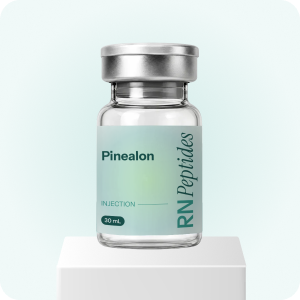
Ask your questions.Choose your preferred dose, then complete a clinical review. Your provider will determine whether a prescription is appropriate and confirm your actual formulation and dosing.
NURSE FOUNDED. PERSONAL CONVERSATION.
Meet the peptide behind cellular-resilience research.
Supports a more informed approach to brain-health and healthy-aging questions by giving you a closer look at the cellular research behind Pinealon, and a personal conversation about your goals with a team that's glad to help.
¹ Cell-culture study. Research findings, not personal results.
Details on request
Contact our team for current product details.
Reach out with your goals and your product questions. Our team helps you explore the formulation and availability details.
It's an illustration of the product concept. Our team can share the formulation, route, and availability details.
Illustrative imagery. Information about an ingredient does not establish a clinical offer or predict an individual result.
YOUR QUESTIONS. A CLOSER LOOK.
Pinealon is a short peptide made of three amino acids, glutamic acid, aspartic acid, and arginine. You may also see it called EDR, after the first letter of each one.
Researchers have studied it for how cells respond when conditions get stressful. In cell studies, they've looked at cell survival and at markers of oxidative stress, which gives them starting points for further questions.
If you're curious about brain health or healthy aging, understanding that research makes the wider peptide conversation easier to follow. It shows you the cellular questions behind the interest in Pinealon.
Your own goals bring it into focus. Whether you're exploring healthy-aging information or want to understand a peptide you've read about, a good conversation starts with the questions that matter to you.
RN Peptides welcomes that curiosity. Ask our team about the compound, the current product details, and the evidence behind the discussion, so you can take your next step with more clarity.
See how it supports you ↗WHAT THE RESEARCH EXPLORES. PERSONAL SUPPORT.
Here's what draws researchers to Pinealon, in everyday terms.

Researchers have studied Pinealon in experimental models that look at how cells respond to stress.¹ ²
That focus explains the interest in cellular resilience: the processes that help cells keep working under challenging conditions.

Experimental studies measured oxidative-stress markers in cell models exposed to Pinealon, including reactive oxygen species, and found lower buildup in stressed cells.¹
Those measurements are one way to explore biological activity, and they show what scientists actually observed.

Some studies look at nerve-related cells and how they respond in controlled laboratory settings.¹
That gives brain-health research a specific cellular focus, and the linked papers explain the models and measurements behind it.

Start with what you'd like to understand about brain-health information and your wider wellness priorities.
Our team helps you pinpoint the product details and the questions to bring to a qualified clinician.

Knowing a peptide's identity makes it easier to compare information from different sources.
Ask about Pinealon specifically, the formulation being discussed, and the studies behind the explanation, so your conversation stays on your questions.
Explore the supporting sources below for the research behind these areas.
THE EVIDENCE BEHIND THE INTEREST
Pinealon research looks at how cells behave under experimental stress. Published work has examined oxidative-stress markers and cell viability in laboratory models.¹
Open the primary studies below to see what was measured. The safety section explains how to read these observations.
Explore official and published sources ↗
Cellular questions, backed by studies.
POTENTIAL BENEFITS & RESEARCH HIGHLIGHTS
Take a look at the areas behind the interest in Pinealon, from the biology researchers are investigating to the goals worth talking through with our team.
Research findings, not personal results. These cards describe preclinical research and conversation goals.
Experimental work has looked at how cells behave under stress. That's the research focus behind the interest in cellular resilience.¹ ²
Preclinical research
A primary Pinealon publication looked at cell viability in experimental systems, and cell death was lower in the stressed cells it studied.¹
Cell-based measurements
Researchers examined oxidative-stress markers in cell models. These measurements help explain the mechanism under investigation.¹
Laboratory models
Share the questions that brought you to Pinealon. Focus, memory, and healthy aging make good topics for a clinical conversation.
Personal goals
Ask about the compound, the formulation, and the available evidence. A clear picture of those details helps you explore your questions with the right professional.
Individual conversation
Open the supporting studies below to see what was measured and in which setting.
KEEP LEARNING
Three approachable reads to help you explore the compound and feel ready for your next conversation.
Peptide basicsLearn what EDR stands for and how it connects to Pinealon's three amino acids.
ResearchGet a simple introduction to the cell responses that Pinealon research has measured.
QuestionsBring your goals into focus and explore the questions worth asking about a peptide.

BUILT FOR YOUR LIFE
Explore the peptide science that interests you with a team that welcomes questions. Bring your wellness priorities, and let's make the product conversation clearer.
THE RN PEPTIDES WAY
Bring your goals, explore the product details, and talk with people who welcome your questions.
Nurse-founded perspective • Personal conversation • Clear next steps
Pinealon
START WITH WHAT MATTERS TO YOU
If any of these sound like you, a conversation can help you find the information you're looking for.
You want a clear introduction to Pinealon and the cellular research behind the interest.
You'd like to bring your focus, memory, or healthy-aging questions to a qualified professional.
You want to understand the actual compound, the product details, and the available evidence before choosing your next step.
YOUR PATH, STEP BY STEP

Share your goals and the questions you want answered. Our team helps you make your inquiry focused and personal.

Ask about the compound, formulation, route, and current availability, so you have the facts that matter for your inquiry.

Bring your questions to a qualified clinician to talk through your needs and the options that suit you.
KEEP EXPLORING
Browse the rest of our range and bring your questions to the care team.
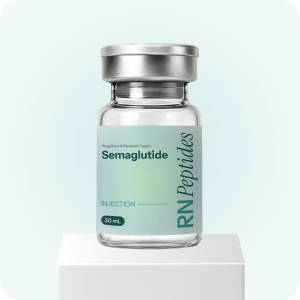
$149 / month
Explore details ↗
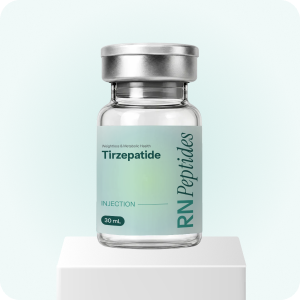
$199 / month
Explore details ↗
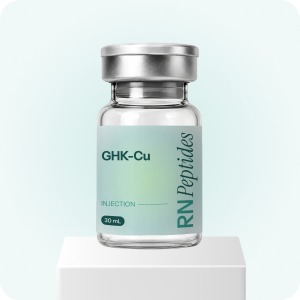
$149 / month
Explore details ↗

THE TEAM IN YOUR CORNER
From your first question to your next step, you're supported by a nurse-founded team that combines clinical review, pharmacy fulfillment, and people you can reach whenever you need them.
Figures refer to the backing network and professional experience, not semaglutide outcomes. Team imagery is illustrative.
BEFORE DECIDING
This is a product-information listing and a product inquiry. It isn't a prescription or dispensing service, there's no active checkout, and it doesn't describe an FDA-approved treatment. The formulation, route, price, and clinical availability haven't been confirmed. Many peptides in clinical catalogs are investigational or may not be FDA approved for the uses described.
The findings on this page come from cell and animal studies. They explain the interest in Pinealon, and they aren't results for a person. Human cognitive, sleep, and longevity benefits haven't been established by these studies, and no human timeline or improvement percentage exists for memory, focus, sleep, or longevity. Much of the published research comes from the group that developed Pinealon. Nobody can promise a result.
The evidence cited here doesn't establish a complete human safety profile for Pinealon. No reported harm in a small or nonhuman study doesn't demonstrate safety.
Drowsiness and vivid dreams have been reported with injectable use. Don't drive after an injection. Talk with a qualified clinician about any unusual symptoms.
No standard patient dose, injection regimen, cycle, or proven route is presented here. Research use and a commercial listing don't show that a compound is suitable for human treatment. Don't combine Pinealon with other peptides or supplements based on an online listing.
Don't use this page in place of an assessment of memory, mood, sleep, or neurological symptoms. Qualified clinical advice and established options should stay part of that conversation.
Don't use during pregnancy or nursing, or with relevant underlying conditions, unless a qualified clinician has specifically evaluated and authorized it. Share your health history and current medications with your clinician.
Contacting our team doesn't guarantee a prescription or that a product is available. Availability depends on the formulation, clinician licensing, pharmacy fulfillment, and applicable rules. Ask the care team for current product and pricing details. We can't promise a delivery date.
Product and lifestyle images are illustrative, and the product image doesn't confirm a formulation, route, pharmacy, dose, or approval status. The 9, 10,000+, and 75+ figures reflect the backing medspa network and combined professional experience. Team imagery is illustrative. Educational content doesn't replace a consultation or the prescribing information for your exact medication. A source check isn't a clinical-review endorsement.
QUICK ANSWERS
Pinealon is a synthetic peptide made of three amino acids, also called EDR. Researchers have studied it in experiments on how cells respond to stress.
Some experimental work looks at nerve-related cells and their stress responses. That cellular focus is the research interest behind the conversation.
Researchers explore its effects on cell viability and oxidative-stress markers in experimental models. The section above explains those areas in plain language.
It describes research on how cells respond under challenging experimental conditions. It's a research theme on this page.
EDR comes from the three amino acids that make up Pinealon: glutamic acid, aspartic acid, and arginine.
Share the brain-health or healthy-aging questions you want to explore. Your goals help make the conversation more useful.
The studies use measurements tied to reactive oxygen species and cell responses. The linked papers explain them.
Use the supporting-source links near the bottom of the page. They name the study setting and the kind of findings each one reports.
Our nurse-founded perspective connects your goals with a personal conversation. Ask the team about product details, evidence, and available options.
Select Ask about this peptide to reach our team. Tell us your goals and what you'd like to understand about Pinealon.
Absolutely. Start with whatever matters most to you, from the compound and research to formulation and availability.
Share your main goals, relevant health history, current medications, and any product information you already have. That helps make your conversation useful.
Open the supporting sources at the bottom of this page. Each link names the study or official resource, so you can explore the evidence directly.
It walks through the five areas behind the interest in Pinealon, plus the goals and product questions worth bringing to our team.
Start with the exact compound, formulation, route, and the evidence for the intended use. The team helps you gather the details that matter for your questions.
Reach out and the team confirms which formulation, route, and product details are available to discuss.
Pricing is available on request. Select Ask about this peptide to ask for current product and availability information.
This page leads to a product inquiry. The care team explains availability and your next step, and there's no active checkout for this listing.
RN Peptides is nurse founded, with a care approach built on personal conversations, clear next steps, and easy access to product information.
The safety and ordering section above covers the research limits, possible effects, dosing, health history, and ordering details. Links to official sources follow below.


DIG DEEPER
Browse the research and official safety information.
Cellular oxidative-stress findings.
Read the source ↗Animal-model observations.
Read the source ↗A discussion of how Pinealon might work at the cell level.
Read the source ↗Clinical context on unapproved peptide products and uncertainty.
Read the source ↗Sources checked October 14, 2026.
THE TEAM BEHIND THE PAGE
Patient educationPeptide information • Your questions & next steps.
We prepared this page to help you explore Pinealon, see the research behind the interest, and feel ready for a personal product conversation. It connects your questions with clear product details and sources you can open.
Links to the research and official information behind this page.
Study findings sit beside your own goals and your clinician's guidance.
A one-on-one conversation connects your goals with the information that suits you.
Educational content does not replace a consultation or the prescribing information for your exact medication. A source check is not a clinical-review endorsement.
Before checkout, enter your contact information. All fields are required.
Your cart is empty. Explore the peptides you’d like to discuss with your nurse practitioner.
Explore Peptides →Your nurse practitioner determines whether a prescription is appropriate. Review all applicable fees and terms before placing an order.