
Search for peptide therapy in Texas and you’ll find clinics, online programs, and sellers. Each one comes with its own promises. Prices differ, product names overlap, and the rules keep moving. A clear checklist helps more than a ranking.
This guide shows you how to compare your options. You’ll see how to total the costs, read a product label, and verify a provider’s licenses. You’ll also see where each treatment stands in the research. For product details, visit RN Peptides.
Peptide Therapy in Texas: What to Know Before You Start
Here are the quick answers. Each one points to a section below.
- Options. FDA-approved medicines, compounded prescriptions, and investigational compounds all appear under this label.
- Costs. Medication is one line, and consultation, supplies, shipping, and follow-up add to it.
- Evaluation. A licensed clinician decides whether a treatment fits you.
- Access. Texas patients can use online care or a local clinic.
- Rules. Legal status depends on the specific product.
- Next step. Compare written quotes and verify licenses.
What Is Peptide Therapy, and What Does the Term Include?
Peptides are short chains of amino acids. Some are established medicines, such as the GLP-1 class used for weight management. Others are research compounds sold under wellness labels. Peptide therapy covers both groups, so the exact product name tells you more than the label.
Related therapies sit outside the group. NAD+ is a coenzyme, the central redox helper of metabolism. Clinics often list it beside peptides, which is why the terms overlap.
Which Treatment Goals Bring Patients to Peptide Providers?
Most patients arrive with one of four goals. This table shows each goal with an example and a snapshot of the evidence.
| Goal | Examples | Evidence Snapshot |
| Weight management | Semaglutide, Tirzepatide | Large randomized trials support FDA-approved GLP-1 medicines |
| Skin appearance | GHK-Cu | Small human trials of topical creams, and early research on other forms |
| Cellular energy | SS-31, NAD+ | SS-31 has one approved use, and NAD+ has early human data |
| Brain health | Pinealon, PE-22-28 | Cell and animal studies |
FDA granted elamipretide, the approved form of SS-31, accelerated approval for Barth syndrome in 2025. Topical GHK-Cu has been studied in small human trials, mostly funded by the cosmetic industry. Each product page lays out its own sources.
Evidence-supported uses and preliminary research are different things. The linked guides explain which is which.
FDA-Approved, Compounded, and Investigational, Understanding Your Options
These three terms describe how a treatment reaches you. Plain definitions help.
- FDA-approved. FDA reviewed a specific drug product for a specific use.
- Compounded. A licensed pharmacy prepares a medicine for an individual patient on a prescription.
- Investigational. Researchers are still studying the compound in trials.
Approval applies to a particular product and indication. Compounding and investigational use follow different requirements. The safety and regulatory section below shows how FDA describes each one.
Are Peptides Legal in Texas? Why the Specific Product Matters
The answer depends on the product. Texas boards license the practitioners and pharmacies, while FDA sets the rules for the products. A clinician can explain how both apply to your treatment.
Four facts shape the answer.
- The compound.
- The formulation and route.
- The intended use.
- The prescriber and the dispensing pharmacy.
The dated review in the safety section tracks current announcements. It helps you separate final rules from proposals and recommendations.
Who Can Evaluate, Prescribe, and Administer Treatment?
Several licensed professionals share the work. Physicians evaluate and prescribe. Texas nurse practitioners prescribe under a written prescriptive authority agreement with a delegating physician. The physician registers that delegation with the Texas Medical Board. Nurses administer treatments under orders, and pharmacists dispense prescriptions.
Texas gives you free tools to verify each license.
- The Texas Medical Board’s Look Up a License tool covers physicians and physician assistants.
- The Texas Board of Nursing runs a license verification portal for nurses and nurse practitioners.
- The Texas State Board of Pharmacy offers license verification for pharmacists and pharmacies.
The boards’ websites list current scope and delegation rules.
How Much Does Peptide Therapy Cost in Texas?
Cost depends on the compound, the form, and the care around it. A fair total adds several lines.
- Consultation fees.
- Medication.
- Injection supplies.
- Laboratory testing, when your clinician orders it.
- Shipping.
- Follow-up visits.
Ask for a dated, written quote that labels introductory offers, ongoing charges, and excluded services. RN Peptides pricing: [price and unit to be confirmed]. Our team shares current details on request.
How to Compare Two Quotes Without Missing Hidden Costs
A vial price and a program price are different numbers. Compare the same compound, formulation, concentration, quantity, treatment period, and included care. This worksheet keeps the comparison fair.
| Cost Item | Quote A | Quote B | Notes |
| Compound and formulation | Same product? | ||
| Concentration and quantity | Total per vial | ||
| Treatment period | Weeks or months | ||
| Consultation | One-time or recurring | ||
| Supplies | Included or extra | ||
| Laboratory testing | When indicated | ||
| Shipping | Per order | ||
| Follow-up care | Included or extra | ||
| Expected total | Full program |
Fill in each column from written quotes. The lower total tells you more than the lower vial price.
Does Insurance Cover Peptide Therapy?
Coverage depends on the drug, the diagnosis, the insurer, and the plan. Prior authorization is common. FDA-approved GLP-1 medicines can qualify under some plans.
Medicare offers one new pathway. A temporary GLP-1 Bridge began July 1, 2026, covering certain FDA-approved GLP-1 drugs for a $50 monthly copay through 2027. It runs outside regular Part D, which normally excludes weight-loss drugs. The Bridge names specific FDA-approved products, so ask any plan how it handles compounded prescriptions.
Call your insurer with the exact drug name and the diagnosis your clinician plans to use.
HSA/FSA, Financing, and Memberships, What Should You Check?
Pre-tax accounts can help. IRS Publication 502 counts prescribed medicines, and weight-loss treatment for a disease a physician diagnoses, such as obesity, as medical expenses. Individual health FSAs can be narrower than Publication 502. Confirm eligibility with your plan administrator, and ask your clinician about a letter of medical necessity.
Use this list for financing and memberships.
- Recurring billing dates and amounts.
- Cancellation steps and any notice period.
- Refund policy, stated in writing.
- Fees outside the monthly price.
- What the membership includes.
RN Peptides payment options: [to be confirmed].
Online Peptide Care vs. a Local Texas Clinic
Both models can work well. This table compares them.
| Factor | Online Care | Local Clinic |
| Convenience | Visits from home, delivery to your door | Visits in person, pickup or in-office treatment |
| Evaluation | Video or phone intake, plus records | Face-to-face conversation |
| Physical Exam | Limited to what a video visit allows | Hands-on exam available |
| Injection Support | Training by video or phone | Training in person |
| Follow-Up | Messages and scheduled calls | Return visits |
| Cost Drivers | Consultation, medication, shipping | Overhead, visit fees, medication |
Texas law since 2017 doesn’t require a face-to-face visit to establish a practitioner-patient relationship by telemedicine. Telemedicine practitioners meet the same standard of care as in-person ones.
In-person assessment adds value in a few situations.
- Your history calls for a hands-on exam.
- You prefer to learn injections face to face.
- Your clinician wants tests or monitoring close to home.
How Consultations and Home Delivery Work
The steps follow a clear path. Here’s how a typical online program runs.
- Intake. You share your history, medicines, allergies, and goals.
- Assessment. A licensed clinician reviews your information.
- Testing. Your clinician orders labs when they’re indicated.
- Decision. You and your clinician choose the treatment that fits.
- Dispensing. A licensed pharmacy prepares the prescription.
- Delivery. The product arrives with written instructions.
- Follow-up. Your clinician reviews progress on a set schedule.
Your clinician decides whether a prescription fits your needs. Availability depends on your state and the product.
How to Choose a Peptide Provider in Texas
Good providers answer these questions clearly. Use this verification checklist.
- Verify each clinician’s license with the Texas boards.
- Ask them to explain the evidence behind the treatment.
- Ask for the exact compound, formulation, and concentration.
- Ask which licensed pharmacy dispenses it.
- Request a written quote with every fee listed.
- Ask how they monitor your response.
- Confirm how you reach the team after delivery.
- Ask what happens if you have a problem.
A provider who welcomes these questions earns your trust.
Product Quality, What Documentation Can Tell You
Good documentation answers practical questions. Look for these items on the label and in your paperwork.
- Product name, concentration, and quantity.
- A batch or lot identifier.
- A beyond-use date.
- Storage instructions.
- Testing documents from the pharmacy or manufacturer.
The sourcing section below explains how to read testing documents alongside sterility and regulatory status.
Explore Peptide Options at RN Peptides
Once you know what to check, you can review our listings against your checklist. Each product page lays out the research in plain language and lists the sources.
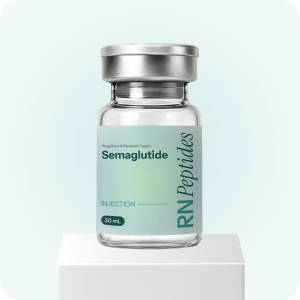
Semaglutide
Semaglutide vial
Weight-management support from a GLP-1 medicine. Your clinician confirms the exact formulation.
Price: [price and unit to be confirmed]
View Semaglutide Details
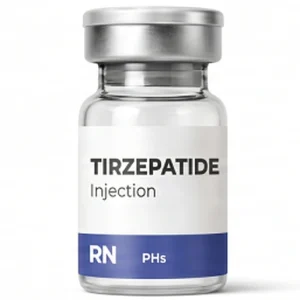
Tirzepatide
Tirzepatide vial
Weight-management support with a different GLP-1 medicine. Compare it with semaglutide.
Price: [price and unit to be confirmed]
View Tirzepatide Details
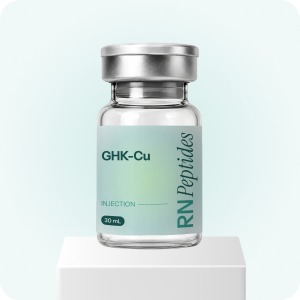
GHK-Cu
GHK-Cu vial
Copper-peptide research and skin-biology questions. Our team confirms the formulation.
Price: [price and unit to be confirmed]
View GHK-Cu Details
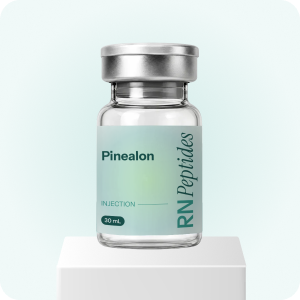
Pinealon
Pinealon vial
Brain-health research in cells and rodents.
Price: [price and unit to be confirmed]
View Pinealon Details
PE-22-28
PE-22-28 vial
Mood-related research in mice.
Price: [price and unit to be confirmed]
View PE-22-28 Details
Research interest and established treatment benefits are different things. Each page lists its sources, so you can read the studies.
Why Choose RN Peptides?
- A nurse-founded team that welcomes your questions.
- A licensed nurse practitioner who reviews your history and request.
- Pharmacy-fulfilled orders, with delivery updates in your account.
- Research highlights and source links on every product page.
- Clear next steps, from first question to follow-up.
What to Expect From an RN Peptides Consultation
You start on a product page, and your account holds the rest. A nurse practitioner reviews your history and request. Your nurse practitioner determines whether a prescription is appropriate. When a prescription is approved, a pharmacy partner prepares it and ships it. Your account shows delivery updates.
Prepare these items before your consultation.
- Your health history and current medicines.
- Any allergies, especially to injectables.
- Your goals and the outcomes you want to track.
- A list of questions for your clinician.
Review all applicable fees and terms before you place an order. The How Ordering Works page walks through each step.
Accessing Care From Dallas, Austin, Houston, and Across Texas
RN Peptides delivers care online, so the process is the same in Dallas, Austin, Houston, and smaller Texas communities. Our backing network includes Texas medspa locations, and the care itself runs online. Check the state availability page for service details, and ask our team to confirm delivery to your address.
Results, Side Effects, and Follow-Up, Questions to Ask
Outcomes and monitoring depend on the treatment. Bring these questions to your clinician.
- Which outcome will we track, and how?
- When will we review the first results?
- How do I report a side effect?
- When do we reassess the plan?
- What would lead us to change or stop treatment?
The safety section below covers where to report effects and when to get help.
Peptide Safety and Regulatory Information
This section gathers the regulatory and safety information in one place. It reflects what I checked as of October 16, 2026.
Dated Regulatory Review
| Topic | Status as of October 16, 2026 |
| Compounded drugs | Not FDA approved, and FDA doesn’t review them before they are marketed |
| GLP-1 compounding | FDA considers the shortages resolved, and copies of approved products face limits |
| GLP-1 proposal | FDA proposed leaving semaglutide, tirzepatide, and liraglutide off the 503B bulks list |
| Other peptides | An FDA advisory committee recommended six peptides in July 2026, and FDA decides |
| GHK-Cu injectable | Advisory review expected before February 2027 |
| NAD+ injections | Not FDA approved |
| SS-31 | Approved only as elamipretide for Barth syndrome |
What FDA Has Said
Compounded drugs aren’t FDA approved, so FDA doesn’t review them for safety, effectiveness, or quality before marketing. FDA says a compounded drug might be appropriate when an approved drug can’t meet a patient’s medical need.
For GLP-1 drugs, FDA resolved the tirzepatide shortage on December 19, 2024, and the semaglutide shortage on February 21, 2025. The Fifth Circuit upheld those decisions, which ended the shortage-based pathway for large-scale compounding of essentially copies. Adding another substance to a compounded product that is otherwise essentially a copy doesn’t by itself change how FDA views it. FDA also says salt forms such as semaglutide sodium and acetate are different active ingredients from those in approved drugs.
In March 2026, FDA sent 30 warning letters to telehealth companies over compounded GLP-1 marketing. In spring 2026, FDA proposed leaving semaglutide, tirzepatide, and liraglutide off the 503B bulks list, and that proposal isn’t a final rule.
For other peptides, HHS confirmed the removal of 12 peptides from Category 2 in April 2026. In July, the advisory committee recommended six of seven peptides it reviewed, including Epitalon and Semax. FDA makes the final decision on each one. The group meets again in February to review injectable GHK-Cu.
NAD+ isn’t FDA approved for any medical indication, and compounded NAD+ injections aren’t approved finished drug products. Elamipretide’s approval covers Barth syndrome in people weighing at least 30 kg.
What This Means for Your Decision
Federal product rules apply in Texas, and Texas boards license the practitioners and pharmacies. Ask any provider, including us, for the legal basis, the dispensing pharmacy, and the exact formulation for your treatment. For compounded GLP-1 products, ask how the preparation differs from the approved product and why your medical need calls for it.
Skip use of any peptide during pregnancy or nursing unless a qualified clinician evaluates and authorizes it. Share your full health history and medication list with your clinician.
Product Quality and Sourcing Safety
Where your product comes from shapes its safety. Use this list to confirm what you’re getting.
- FDA has flagged dosing concerns with compounded semaglutide and tirzepatide, including vials that hold multiple doses. Ask exactly how to measure your dose.
- Injectable GLP-1 products need refrigeration, and consumers have reported compounded products arriving warm. Check the cold-chain instructions.
- FDA reminded compounders that food-grade NAD+ needs processing before sterile use. In 2025, a NAD+ injection recall reached Class I after tests found elevated endotoxin levels.
- A “for research use only” label signals material made for laboratory work, not for people.
- A certificate of analysis speaks to identity and purity. Sterility and clinical effect need separate assurance.
- Verify the dispensing pharmacy’s license with the Texas State Board of Pharmacy.
- FDA encourages patients and clinicians to report adverse events to its MedWatch program.
- Seek prompt medical care for severe or unusual symptoms.
Frequently Asked Questions About Peptide Therapy in Texas
Here are short answers to the most common questions. Each one points back to the detail above.
Is Peptide Therapy Legal in Texas?
It depends on the specific product. See the legality section and the dated regulatory review.
Are All Peptide Treatments FDA Approved?
Approval applies to specific products and uses. The regulatory review above lists the status by category.
How Much Does a Complete Peptide Program Cost?
Add consultation, medication, supplies, testing, shipping, and follow-up. The worksheet above helps you compare totals.
What Should a Treatment Quote Include?
It should list the compound, formulation, concentration, quantity, period, and every fee.
Does Insurance Cover Peptide Medications?
Coverage depends on the drug, the diagnosis, and the plan. Medicare’s temporary Bridge covers certain FDA-approved GLP-1 drugs.
Can HSA or FSA Funds Be Used?
IRS Publication 502 supports prescribed medicines for diagnosed conditions. Confirm details with your plan administrator.
Can Texas Patients Receive an Online Consultation?
Yes. Texas law doesn’t require a face-to-face visit to establish the relationship.
Which Products Can Be Delivered to My Address?
Availability depends on your state, the clinician, and the pharmacy. Our team confirms it for you.
How Can I Verify a Provider and Dispensing Pharmacy?
Use the Texas Medical Board, Board of Nursing, and State Board of Pharmacy lookups.
Are Laboratory Tests Always Required?
Your clinician orders tests when your history and treatment call for them.
How Soon Should Treatment Results Be Assessed?
Set a review date with your clinician before you start. Timing depends on the treatment.
What Happens if I Am Not a Suitable Candidate?
Your clinician talks through other options with you.
Ready to compare options? View All Peptides or Ask Our Team.
Sources
- FDA, “FDA’s Concerns With Unapproved GLP-1 Drugs Used for Weight Loss”
- FDA, “FDA reminds compounders to use ingredients suitable for sterile compounding”
- FDA Enforcement Report, NAD+ for Injection recall (Class I)
- Law-firm analyses of the Fifth Circuit GLP-1 shortage decisions and of FDA’s 2026 peptide compounding actions
- Kansas Board of Pharmacy statement on compounded GLP-1 products (April 2026)
- NPR report on copper peptides and FDA’s regulatory limbo (September 2026)
- FDA approval materials for elamipretide (Barth syndrome)
- HealthDay and Alaska Dispatch News reports on the Medicare GLP-1 Bridge (2026)
- IRS Publication 502 and FSAFEDS guidance on medical expenses
- Texas Medical Board, Texas Board of Nursing, and Texas State Board of Pharmacy license verification pages
- Texas Senate Bill 1107 (2017) analyses on telemedicine
This article offers education alongside, not in place of, medical advice. Talk with a qualified clinician about your health history before any treatment decision.