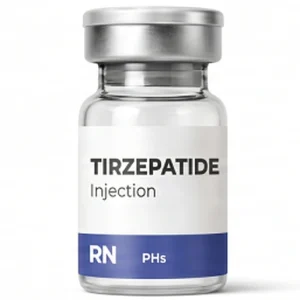

Tirzepatide’s results sound big, and they come with details worth reading. Trials report averages for groups, over set periods, in specific populations. This guide shows what those studies found. You’ll see how to turn percentages into pounds and how to read your own progress with your clinician. For product details, visit Tirzepatide at RN Peptides.
How Much Weight Can You Lose on Tirzepatide? The Short Answer
In SURMOUNT-1, adults with obesity or overweight and no diabetes lost an average of 15.0, 19.5, and 20.9 percent of body weight on the 5, 10, and 15 mg doses over 72 weeks. The placebo group averaged 3.1 percent. Everyone also received lifestyle counseling.
Those numbers describe groups. They don’t predict one person’s result, so use them as a map and let your clinician help you read your own path.
What Clinical Trials Show About Tirzepatide Weight Loss
Five SURMOUNT trials cover different people and questions. This table keeps each result tied to its population and timeframe.
| Trial | Population | Treatment | Duration | Average Weight Change |
| SURMOUNT-1 | 2,539 adults with obesity or overweight, no diabetes | 5, 10, or 15 mg versus placebo | 72 weeks | 15.0%, 19.5%, 20.9% versus 3.1% |
| SURMOUNT-2 | 938 adults with type 2 diabetes | 10 or 15 mg versus placebo | 72 weeks | 12.8%, 14.7% versus 3.2% |
| SURMOUNT-3 | Adults who first lost weight on a 12-week lifestyle program | Maximum tolerated dose | 72 weeks after the lead-in | Additional 18.4% |
| SURMOUNT-4 | 670 adults, no diabetes | 36 weeks of treatment, then continue or switch to placebo | 88 weeks | 20.9% by week 36, then 5.5% more with continued treatment |
| SURMOUNT-5 | 751 adults, no diabetes | Tirzepatide versus semaglutide, each at the maximum tolerated dose | 72 weeks | 20.2% versus 13.7% |
SURMOUNT-1 and SURMOUNT-2 used similar designs, and people with type 2 diabetes lost less on average. SURMOUNT-3 began with intensive lifestyle support that lowered baseline weight by 6.9 percent on average. Read the row that matches your situation.
What Does Percentage Weight Loss Mean in Pounds or Kilograms?
Percentages travel better than pounds, because they scale with your starting weight. In SURMOUNT-1, mean starting weight was 104.8 kg, or about 231 pounds. This table shows the math at three starting weights.
| Starting Weight | 10% | 15% | 20% |
| 180 lb (81.6 kg) | 18 lb (8.2 kg) | 27 lb (12.2 kg) | 36 lb (16.3 kg) |
| 220 lb (99.8 kg) | 22 lb (10.0 kg) | 33 lb (15.0 kg) | 44 lb (20.0 kg) |
| 260 lb (117.9 kg) | 26 lb (11.8 kg) | 39 lb (17.7 kg) | 52 lb (23.6 kg) |
These are mathematical examples. They aren’t forecasts or promised results.
Tirzepatide Weight-Loss Timeline, First Month Through Long-Term Treatment
One timeline covers the whole course. Each row shows what the studies report at that stage.
| Stage | Timeframe | What the Studies Show |
| Initiation | Weeks 1 to 4 | Treatment starts at 2.5 mg, an initiation dose |
| Escalation | Weeks 5 to 20 | The dose rises in 2.5 mg steps, at least four weeks apart |
| Three Months | Month 3 | Real-world average of 5.9 percent |
| Six Months | Month 6 | Real-world average of 10.1 percent |
| Twelve Months | Month 12 | Real-world average of 15.3 percent |
| Trial Endpoint | Week 72 | 15.0 to 20.9 percent in SURMOUNT-1 |
| Maintenance | Week 88 and beyond | Continued treatment added a further 5.5 percent |
The labeled starting dose is 2.5 mg weekly, and it’s for initiation, not maintenance. The dose can rise in 2.5 mg steps after at least four weeks on the current dose. In SURMOUNT-1, reaching 15 mg took 20 weeks.
The month 3, 6, and 12 figures come from a real-world analysis. It reported on-treatment weight changes of 5.9, 10.1, and 15.3 percent at those points. Studies report results at later time points, so the first month has no single average. In SURMOUNT-4, continued treatment added a further 5.5 percent between weeks 36 and 88.
When Might Appetite Change, and When Might the Scale Change?
Appetite, fullness, cravings, and weight are four different things. The first three are feelings, and weight is a measurement. Clinical studies show tirzepatide reduces appetite by increasing feelings of fullness and decreasing hunger and cravings.
The feelings and the scale can move at different speeds. A calmer appetite is a good early sign, even before a weight trend appears. Your clinician looks at both.
Why Tirzepatide Results Differ Between People
Many factors shape a result. This list shows the main ones.
- Baseline weight. Percentage changes scale with your starting point.
- Diabetes status. Trial averages differ between people with and without type 2 diabetes.
- Treatment exposure. The dose you reach and your time on treatment both count.
- Tolerability. Comfort affects whether treatment continues smoothly.
- Adherence. Regular weekly doses support steady progress.
- Other medicines. Some medicines affect weight or appetite.
Progress reflects all of these factors, not effort alone.
Does a Higher Dose Always Mean More Weight Loss?
In SURMOUNT-1, group averages rose across the 5, 10, and 15 mg doses. Averages describe groups, and individuals respond differently. The label asks prescribers to weigh treatment response and tolerability when choosing a maintenance dose. It lists 5, 10, and 15 mg as recommended maintenance doses.
Your prescriber picks the dose that balances progress and comfort.
How Much Weight Loss Is Fat, and What Happens to Lean Mass?
Four terms help here. Body weight is the total. Fat mass is stored fat. Lean mass includes muscle, organs, water, and connective tissue. Muscle is one part of lean mass.
A SURMOUNT-1 substudy measured body composition with DXA scans. Fat mass fell 33.9 percent and lean mass fell 10.9 percent with tirzepatide. About 75 percent of the weight lost was fat and 25 percent was lean mass. The placebo group showed the same split.
The substudy included 160 of the 2,539 participants, and DXA gives estimates rather than direct muscle measurements.
Supporting Nutrition, Strength, and Function During Treatment
Healthy habits make the most of your treatment. Here’s what a supportive plan can include.
- A nutrition plan built around your needs, with enough protein.
- Resistance activity that fits your fitness level.
- Steady fluids through the day.
- Sleep that supports recovery.
- A clinician or dietitian who tailors the targets.
Your clinician sets your protein goal, since needs differ by body size, age, and health.
When the Scale Pauses, What to Review With Your Clinician
A pause is a good moment for a review. Your clinician looks at several areas together.
- How long you’ve been on treatment and at which dose.
- How consistently you’ve taken each dose.
- Your nutrition and fluid intake.
- Constipation and other digestive changes.
- Fluid shifts, which can hide fat loss on the scale.
- Other medicines and medical factors.
Bring a short log to the visit. A review guides any change, so adjust nothing on your own.
Tirzepatide Plateaus, When to Review Your Plan
Weight curves flatten as treatment continues. In SURMOUNT-4, average weight plateaued around week 70 on continued treatment. A single flat week reflects normal fluctuation. A flat trend over several weeks is worth a conversation.
Use this progress-review checklist before your visit.
- Record your weight trend over several weeks.
- Note your waist measurement and how your clothes fit.
- Track your energy and daily activity.
- Log your meals, protein, and fluids.
- Record any side effects and their timing.
- List your medicines and any recent changes.
- Write down your goals and questions.
Your clinician then reassesses your goals, tolerability, and response.
Tirzepatide vs. Semaglutide, Comparing Weight-Loss Results Fairly
Both medicines have strong trial records. One trial compared them directly. SURMOUNT-5 was open-label and randomized 751 adults without diabetes to the maximum tolerated dose of either medicine for 72 weeks. Average weight change was 20.2 percent with tirzepatide and 13.7 percent with semaglutide. Waist circumference fell 18.4 cm versus 13.0 cm.
Those results belong to the regimens studied. The semaglutide doses were 1.7 or 2.4 mg. No head-to-head trial compares semaglutide 7.2 mg with tirzepatide. You can explore semaglutide product details to compare both options.
Beyond the Scale, Other Ways to Track Progress
Weight is one useful number among several. Track these too.
- Waist measurement, taken the same way each time.
- Strength, such as how many repetitions you complete.
- Everyday function, such as stairs, walking, and energy.
- Quality of life, including sleep and mood.
- Clinical markers your clinician orders.
Consistent measurement gives you the clearest picture.
Reaching Your Goal, Maintenance and Next Steps
Maintenance is part of the plan. In SURMOUNT-4, adults who continued tirzepatide kept losing weight, with a further 5.5 percent over 52 weeks. Among them, 93.4 percent kept at least 80 percent of their earlier loss.
In a three-year follow-up of SURMOUNT-1, average weight loss reached 22.9 percent at 15 mg. Plan your next phase with your clinician. The safety section covers what trials observed after stopping.
Tirzepatide Comfort Supports Consistency
Dose steps are built around tolerability, and your clinician can slow the pace to keep you comfortable. Comfortable treatment supports steady progress. The safety section lists the effects documented in the prescribing information and when to get help.
Tirzepatide Safety Information
This section gathers the safety information in one place. Two parts cover what the label says and what researchers are still learning.
What the Prescribing Information Says
The label carries a boxed warning about thyroid C-cell tumors. A personal or family history of medullary thyroid carcinoma, or MEN 2, rules out treatment. Documented gastrointestinal effects include pancreatitis, cholecystitis, and cholelithiasis.
Common effects include nausea, diarrhea, decreased appetite, vomiting, and constipation. Vomiting and diarrhea can lead to dehydration. Most reported kidney injury events occurred in people with nausea, vomiting, diarrhea, or dehydration. The label suggests considering a lower insulin or insulin secretagogue dose.
Tirzepatide can reduce the efficacy of oral hormonal contraceptives. The label advises a non-oral method, or an added barrier method, for four weeks after starting and after each dose increase. Tirzepatide should not be used in pregnancy.
In SURMOUNT-4, 7.0 percent of participants stopped during the lead-in, mainly because of gastrointestinal effects. Seek prompt care for severe abdominal pain, persistent vomiting, signs of dehydration, or signs of an allergic reaction.
What Researchers Are Still Learning
Weight can return after treatment stops. In SURMOUNT-4, adults who switched to placebo regained 14.0 percent on average. In the three-year SURMOUNT-1 follow-up, some who stopped began regaining weight.
Real-world persistence varies. In one large analysis, follow-up ended because of discontinuation for 56 percent of tirzepatide patients within a year. Trial results describe FDA-approved products, so they don’t automatically apply to a compounded preparation.
Compounded Product Safety and Regulatory Information
Your product’s source shapes its safety. This section reflects what I checked as of October 16, 2026. Two parts cover FDA’s position and how to confirm what you’re getting.
What FDA Says About Compounded Tirzepatide
Compounded drugs aren’t FDA approved, so FDA doesn’t review them for safety, effectiveness, or quality before marketing. FDA says a compounded drug might be appropriate when an approved drug can’t meet a patient’s medical need.
FDA resolved the tirzepatide shortage on December 19, 2024. The Fifth Circuit upheld the shortage decisions, which ended the shortage-based pathway for large-scale compounding of essentially copies. Adding another substance to a compounded product that is otherwise essentially a copy doesn’t by itself change how FDA views it. In March 2026, FDA sent 30 warning letters to telehealth companies over compounded GLP-1 marketing.
Ask any provider, including us, for the legal basis, the dispensing pharmacy, and the exact formulation. Ask why your medical need calls for a compounded preparation.
How to Confirm What You’re Getting
Use this list to check your product.
- FDA has flagged dosing concerns with compounded tirzepatide, including vials that hold multiple doses. Confirm the volume or units to draw with your pharmacist.
- Injectable GLP-1 products need refrigeration, and consumers have reported compounded products arriving warm.
- A “for research use only” label signals material made for laboratory work, not for people.
- Verify the dispensing pharmacy’s license with the Texas State Board of Pharmacy.
- FDA urges patients to report suspected side effects or quality concerns through MedWatch.
Explore Tirzepatide at RN Peptides
Once you understand the results, you can review our listing against your checklist. Our product page lays out the research in plain language and lists the sources.
Tirzepatide
- Our listing describes a compounded tirzepatide preparation dispensed by a pharmacy partner. The safety section above explains how compounded and FDA-approved products differ.
- Formulation, concentration, and instructions, confirmed by our team and your pharmacy label
- Pricing: [price and billing period to be confirmed]
- A nurse practitioner who reviews your history and request
- Research highlights and source links on the product page
Your nurse practitioner determines whether a prescription is appropriate. Review all applicable fees and terms before you place an order.
View Tirzepatide Product Details | Request a Consultation
What Does a Tirzepatide Program Cost Over Time?
Cost follows several lines, and dose can change some of them. This list shows the full picture.
- Consultation fees.
- Medication, at each dose and quantity.
- Injection supplies.
- Shipping.
- Follow-up visits.
Ask whether the price changes as your dose rises. Ask which prices are introductory and which are ongoing. RN Peptides pricing: [price and billing period to be confirmed], including what’s covered at each dose.
Who Should Discuss Tirzepatide With a Clinician?
A clinician reviews your history, medicines, and plans before prescribing. Trials enrolled adults with a BMI of 30 or higher, or 27 or higher with a weight-related condition. Eligibility follows the product’s label.
Bring these items to your consultation.
- Your health history, including thyroid, pancreas, and gallbladder history.
- A full list of your medicines and supplements.
- Your diabetes status and diabetes medicines.
- Your birth control method and pregnancy plans.
- Your goals and the outcomes you want to track.
Frequently Asked Questions About Tirzepatide Results
Here are short answers to the most common questions. Each one points back to the detail above.
What Is the Average Weight Loss on Tirzepatide?
In SURMOUNT-1, averages ranged from 15.0 to 20.9 percent over 72 weeks, depending on dose.
How Much Weight Might Change in the First Month?
Studies report results at later time points, so the first month has no single average.
What Do Studies Show at Three, Six, and Twelve Months?
One real-world analysis reported 5.9, 10.1, and 15.3 percent on treatment.
Why Is Percentage Weight Loss More Useful Than Pounds Alone?
Percentages scale with your starting weight. The conversion table shows the math.
Does Everyone Need the Highest Dose?
No. Your prescriber balances progress and comfort when choosing a maintenance dose.
Can Tirzepatide Reduce Lean Mass?
In a SURMOUNT-1 substudy, about 25 percent of weight lost was lean mass.
Why Has My Weight Stopped Changing?
Review treatment duration, adherence, nutrition, fluids, and medicines with your clinician.
Can Appetite Improve Before Weight Changes?
Yes. Appetite and the scale can move at different speeds.
How Does Tirzepatide Compare With Semaglutide?
In SURMOUNT-5, tirzepatide averaged 20.2 percent and semaglutide 13.7 percent at 72 weeks.
What Happens After Reaching a Goal Weight?
Your clinician plans maintenance with you. Continued treatment added weight loss in SURMOUNT-4.
Can Weight Return After Stopping Treatment?
The safety section summarizes what trials observed after stopping.
What Should a Complete Treatment Quote Include?
It should list consultation, medication, supplies, shipping, follow-up, and dose-related price changes.
Ready to talk? Discuss Your Weight-Management Options.
Sources
- Jastreboff AM, et al. SURMOUNT-1 trial (New England Journal of Medicine, 2022) and its 176-week follow-up
- SURMOUNT-2 (The Lancet, 2023) and SURMOUNT-3 results
- Aronne LJ, et al. SURMOUNT-4 (JAMA, 2024)
- Aronne LJ, et al. SURMOUNT-5 (New England Journal of Medicine, 2025)
- Look M, et al. SURMOUNT-1 DXA substudy (Diabetes, Obesity and Metabolism, 2025)
- Rodriguez PJ, et al. Real-world semaglutide and tirzepatide cohort (JAMA Internal Medicine, 2024)
- FDA prescribing information for tirzepatide for weight management
- FDA, “FDA’s Concerns With Unapproved GLP-1 Drugs Used for Weight Loss”
- Law-firm analyses of the Fifth Circuit GLP-1 shortage decisions
- Kansas Board of Pharmacy statement on compounded GLP-1 products (April 2026)
This article offers education alongside, not in place of, medical advice. Talk with a qualified clinician about your health history before any treatment decision.