

Your liver makes glutathione every day. So do most of your other cells. Concentration runs highest in the liver, which also supplies most of the glutathione in blood plasma. Few molecules of this size do so much work.
That biology is why glutathione keeps appearing in wellness conversations. It’s also why the research has grown so large. This guide covers what glutathione is, what scientists have measured, and how the different routes compare. It closes with the 2026 federal alerts about injectable glutathione. Those alerts deserve a full section of their own.
Three Things to Know First
- Glutathione is a natural three-amino-acid peptide that cells build for themselves.
- Laboratory work explains its roles well, and human trials continue to build.
- The safety and regulatory sections hold the 2026 FDA and CDC findings in full.
A Tripeptide With a Big Job
Glutathione is a tripeptide made from glutamate, cysteine, and glycine. Cells build it in two steps, joining glutamate with cysteine first and then adding glycine. The reduced form has the formula C10H17N3O6S and a molecular weight near 307.
An unusual gamma bond links the glutamate and cysteine. The free thiol group on cysteine does the chemical work. Glutathione peptide and glutathione name the same molecule.
What Glutathione Does Inside Cells
Think of glutathione as a cell’s multitool. Several enzymes use it, and each job protects something.
- Neutralizing reactive molecules. Its thiol group neutralizes reactive oxygen species and donates electrons in glutathione peroxidase reactions.
- Clearing foreign compounds. Glutathione S-transferases, most abundant in the liver, speed glutathione’s reaction with many reactive drugs.
- Restoring vitamin C. Glutathione helps restore used-up vitamin C, which then restores vitamin E.
- Supporting mitochondria. Mitochondria import glutathione from the surrounding cell fluid.
- Measuring cell health. Investigators quantify the glutathione to oxidized glutathione ratio in redox-imbalance assays.
- Tuning proteins. Researchers also study S-glutathionylation, a way glutathione regulates proteins.
Why Researchers Care About Supply
Cells need a steady supply. Synthesis drops with aging and in some conditions, such as diabetes. That pattern explains the interest in whether extra glutathione can help.
The question sounds simple, and the answer depends on the route. The next sections follow that thread.
The Research Map
Scientists have studied glutathione from several angles. This table shows the main areas and the kind of study behind each.
| Area | Study Type | What Researchers Examined |
| Oxidative Stress | Human vascular cell study | How vitamin C protected stressed cells alongside glutathione |
| Drug Detoxification | Laboratory enzyme study | Human enzymes that inactivate reactive clozapine products |
| Immune Cells | Cell study | Lymphocyte growth tied to glutathione availability |
| Nerve Health | Hypothesis paper | A link between glutathione decline and nerve cell loss |
| Skin Pigment | Cell-free laboratory study | Glutathione’s effect on melanin production |
| Mitochondria | Review | Glutathione levels inside mitochondria |
In a cell study, lymphocyte multiplication depended directly on glutathione availability. Read the lymphocyte study and the mitochondrial review.
For the enzyme work, see glutathione S-transferases and the clozapine study. The vitamin C study used cells from human blood vessel linings.
Can Added Glutathione Raise Body Stores
This question drove much of the clinical research. Swallowed glutathione has to pass the gut wall and the liver first. Researchers therefore tested whether supplements change the body’s levels at all.
A 6-month randomized, double-blind trial gave oral glutathione to 54 non-smoking adults. It measured glutathione in blood, red cells, plasma, lymphocytes, and cheek cells. The authors concluded that daily supplements increased body compartment stores.
Levels returned to baseline after a one-month washout. That pattern suggests stores follow intake. It also shows the effect is measurable and reversible.
Four Routes Compared
Glutathione reaches the body in several ways. This table summarizes how each route works and where it has been studied.
| Route | How It Enters the Body | Where Research Examined It |
| Oral | Passes the gut and liver before reaching blood | A 6-month trial in 54 adults |
| Inhaled | Delivered to the lungs by nebulizer | A 6-month trial in cystic fibrosis |
| Intravenous | Delivered to the bloodstream immediately | A pilot trial in Parkinson’s disease |
| Subcutaneous or Intramuscular | Crosses one or more membranes first | Reported in clinic practice |
Blood flow at the injection site affects how fast those doses are absorbed. Larger volumes favor the intramuscular route. A prescriber makes the route decision.
Glutathione and Skin Tone
Skin brightening is the most marketed use, so the mechanism deserves a clear explanation. In a 2008 cell-free study, glutathione cut melanin production by the enzyme tyrosinase. The effect grew with higher amounts.
A 2005 review proposes that glutathione may inactivate tyrosinase at its copper-containing site. It may also shift pigment production from eumelanin to pheomelanin. See the melanin study and the 2005 review.
A 4-week trial of oral glutathione reported small reductions in skin pigment versus placebo. A 12-week trial of an oral combination reported skin lightening. The evidence section covers how those results fit together.
Glutathione in Daily Life
Food and habits support the body’s own production. Sulfur-containing foods can help the body make glutathione. Examples include meat, broccoli, asparagus, spinach, garlic, and almonds.
Curcumin, selenium, vitamin C, and vitamin E can also help the liver make it. Regular sleep and exercise support the same cellular systems. A dietitian can tailor a plan to your needs.
How the Research Evolved
- 1980. A review described glutathione S-transferases and their wide distribution.
- 1989. Cell work tied lymphocyte growth to glutathione supply.
- 2000. A review summarized glutathione and immune function.
- 2005. A review proposed how glutathione may reduce melanin.
- 2008. A laboratory study examined melanin inhibition directly.
- 2013. A randomized trial studied inhaled glutathione in cystic fibrosis.
- 2015. A 6-month trial measured oral glutathione and body stores.
- 2026. FDA and CDC published alerts about injectable products.
What to Ask Before Considering Glutathione
A good conversation starts with your goal. Bring a list.
- What do I want glutathione to do, and what evidence addresses that goal?
- Which approved options fit the same goal?
- Which route are we discussing, and why?
- Do my medicines, allergies, or conditions change the plan?
- How will we measure whether it helps, and when do we reassess?
- What would the full cost be, including follow-up?
Glutathione Safety Information
This section gathers the safety information in one place. It covers the 2026 federal alerts, the symptoms to know, the evidence limits, and the precautions.
What FDA Reported
On August 27, 2026, FDA reported at least 30 patients with adverse events after intravenous glutathione. They received it alone or with other ingredients. The reports included fever, chills, pain, dizziness, signs of shock, and sepsis-like symptoms. Some patients were hospitalized.
These symptoms are consistent with exposure to excessive endotoxin levels. FDA said the glutathione was labeled dietary supplement grade. It called that grade not appropriate for making injectable drugs.
The pharmacies involved all obtained their glutathione from one supplier’s lot. Two Texas pharmacies had recalled products over elevated endotoxin levels. FDA said it continues to receive reports and is investigating.
What CDC Reported
In July 2026, Texas health officials told CDC about sick patients. They had received IV glutathione at an outpatient wellness clinic. CDC then received reports of over 25 people sick in at least four states. The states were Texas, Washington, Florida, and New York.
At least three patients were hospitalized, and all three received glutathione intravenously. One patient became critically ill and needed intensive care for shock and abnormal blood clotting. Patients received glutathione intravenously, under the skin, or into a muscle.
All injections linked to the illnesses came from compounding pharmacies using supplement-grade ingredients. At least three Texas pharmacies recalled products over high endotoxin levels. CDC called the investigation ongoing, and the numbers may change.
Contaminated glutathione injections have made patients ill before, including an Australian outbreak in 2015. FDA issued a safety alert in 2019 after events at a U.S. clinic.
Symptoms to Know
Endotoxin reactions can include fever, chills, body aches, headache, nausea, dizziness, and low blood pressure. Reactions can be severe and may need emergency care.
CDC also lists a fast heart rate and injection-site reactions for providers to evaluate. Anyone who recently had an injection and feels unwell should contact a clinician promptly. Seek emergency care for trouble breathing, fainting, or signs of shock.
Limits on the Evidence
Human trials of glutathione are small, short, and mixed. A 6-month trial enrolled 153 people with cystic fibrosis. Inhaled glutathione didn’t improve lung function over placebo. A systematic review judged skin-whitening evidence inconclusive because of study quality and bioavailability concerns.
An intravenous pilot in Parkinson’s disease found no significant benefit over placebo. A 4-week oral trial in 40 healthy adults found no significant change in glutathione status.
A 2000 review found no indication that glutathione improves immune function in healthy people. Glutathione doesn’t cross the blood-brain barrier, according to a 2000 review.
Precautions
A pharmacy’s product page advises avoiding use during pregnancy and lactation because safety data are limited. It also advises caution with asthma, sulfite sensitivity, or a known allergy to glutathione.
In a small 1997 trial, inhaled glutathione narrowed the airways of eight people with mild asthma. Long-term use has been linked to lower zinc levels. Listed side effects include injection-site reactions, headache, nausea, and diarrhea, plus rare hypersensitivity.
Skip use under age 18 unless a qualified specialist authorizes it. Share your full medicine and supplement list with your prescriber.
Glutathione Regulatory Status and Product Safety
This section reflects the sources checked as of October 27, 2026. It covers FDA status, what regulators recommend, product quality, and safe use of this guide.
Where Glutathione Stands
| Topic | Status as of October 27, 2026 |
| FDA-Approved Glutathione Drug Product | None |
| Oral Form | Sold as a dietary supplement |
| Injectable Form | Compounded by pharmacies, not FDA-approved |
| 503A Interim Policy | Listed in Category 1, under evaluation |
| 2022 Advisory Committee | Voted to include it on the final 503A list |
| FDA Final Rule | Not issued |
There’s no FDA-approved glutathione drug product in the United States. It’s sold as an oral dietary supplement promoted for skin brightening, immune support, detox, and energy. Injectable glutathione is a compounded medication.
Ask any provider, including us, for the legal basis, the dispensing pharmacy, and the exact form.
What FDA and CDC Recommend
CDC tells providers not to administer injectable glutathione made from supplement-grade ingredients. It also says not to administer products whose ingredient grade can’t be verified. FDA recommends that professionals check the source of the glutathione with their compounder.
CDC suggests five questions before getting an injection. Was the product made with ingredients intended for injection? Are there treatment options without an injection? Who compounded it, and is the facility licensed? Are there current recalls? What steps ensure sterility and safe endotoxin levels?
CDC adds a sixth question about which symptoms to watch for afterward. Compounding pharmacies should keep a current certificate of analysis for each ingredient lot. FDA says quality must be built into every step and testing alone isn’t enough.
Product Quality and Sourcing
One research supplier sells glutathione for laboratory research only. It states the product isn’t a drug and isn’t FDA-approved. Confirm the exact form, preparing pharmacy, and testing documents before any treatment decision.
What “Research Use Only” Means
Products sold online “for research use only” aren’t approved or quality-controlled for human use. Vendor vials can differ from pharmacy-dispensed products in identity, sterility, and strength. Confirm all three with the dispensing pharmacy.
RN Peptides lists many investigational compounds for discussion only. A listing doesn’t imply approval for human use, and it doesn’t guarantee availability.
Using This Guide Safely
This guide is education. It doesn’t provide dosing, reconstitution, or injection instructions. A prescriber sets any dose after an evaluation. Report suspected side effects through FDA’s MedWatch program. Talk with a qualified clinician about your health history before any treatment decision.
Glutathione Questions People Ask
What does glutathione peptide do for you?
It acts as a major antioxidant inside cells. It also helps enzymes clear reactive compounds and restore other antioxidants.
Should you take NAD and glutathione together?
The studies reviewed here examined glutathione alone. A prescriber can review any combination. The 2026 alerts in the safety section apply to injectables.
How often should I inject glutathione peptide?
A prescriber sets the schedule after an evaluation. This guide focuses on education.
What not to mix with glutathione?
Share your full medicine and supplement list with your prescriber. Any injectable combination should come from a pharmacy that verifies ingredient grade.
What are glutathione S-transferases?
They’re enzymes that speed glutathione’s reactions with reactive compounds. They’re most abundant in the liver but occur in most cells.
What does reduced glutathione mean?
The reduced form is abbreviated GSH. Its oxidized partner, GSSG, helps researchers gauge cell redox balance.
What is glutathione?
It’s a tripeptide of glutamate, cysteine, and glycine that the body makes.
Is glutathione peptide the same as glutathione?
Yes. Both names describe the same molecule.
Where does the body make glutathione?
Most cells make it. The liver makes the most and supplies much of the plasma supply.
Can food raise glutathione?
Sulfur-rich foods and certain nutrients help the body make its own. A dietitian can build a plan around them.
Does glutathione lighten skin?
Laboratory work shows it can reduce melanin production. The skin section and the evidence limits describe the human data.
Can glutathione reach the brain?
A 2000 review says raising brain levels calls for other approaches. Researchers continue to explore them.
Is glutathione an approved drug?
The regulatory section explains its status in detail.
Is injectable glutathione legal in 2026?
The regulatory section covers compounding and the interim policy. Ask any provider for the legal basis.
What are the side effects of glutathione?
The safety section lists the reported effects and the 2026 alerts.
How is glutathione dosed?
A prescriber sets the dose after an evaluation. This guide focuses on education.
Where can I read the original research?
The Sources list links the trials, the reviews, and the FDA and CDC pages.
Bring Your Glutathione Questions to RN Peptides
If you’re exploring antioxidant or wellness questions, our nurse practitioners can talk it through. Bring your history, your medicines, and what you’ve read. Ask which pharmacy prepares a product and how it verifies ingredient grade.
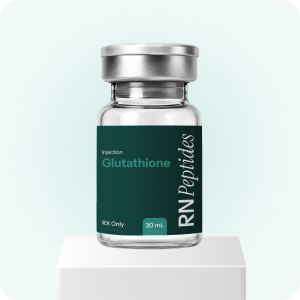
Glutathione
- Injectable format listed in the supplier catalog
- Individual review of your health history and goals
- Clear confirmation of formulation, availability, and full pricing
- Prescription required, with licensed nurse practitioner review
A clinician assesses evidence, risks, eligibility, and availability before any treatment decision. Review all applicable fees and terms before you place an order. The How Ordering Works page walks through each step.
Sources
- FDA, FDA reminds compounders not to use dietary supplement grade glutathione for injectables (August 27, 2026)
- FDA, FDA highlights concerns with using dietary ingredient glutathione to compound sterile injectables (2019)
- CDC, Adverse events linked to injectable glutathione compounded with dietary supplement grade ingredient, current situation (updated September 11, 2026)
- FDA, Victory Medical Center Pharmacy voluntary nationwide recall of compounded glutathione
- FDA, Optimal Balance Pharmacy voluntary nationwide recall of compounded glutathione
- Richie JP Jr, et al. Randomized controlled trial of oral glutathione supplementation on body stores of glutathione. European Journal of Nutrition, 2015
- Griese M, et al. Inhalation treatment with glutathione in patients with cystic fibrosis, a randomized clinical trial. American Journal of Respiratory and Critical Care Medicine, 2013
- Physiological significance of glutathione S-transferases (PubMed 7446736)
- Role of human glutathione S-transferases in the inactivation of reactive metabolites of clozapine (PubMed 20849150)
- Lymphocyte proliferation in glutathione-depleted lymphocytes (PubMed 2575086)
- Glutathione and immune function (PubMed 11115795)
- Inhibitory mechanism of melanin synthesis by glutathione (PubMed 18670186)
- Glutathione as a depigmenting agent, an overview. International Journal of Cosmetic Science, 2005
- Mitochondrial glutathione, features, regulation and role in disease (PubMed 23123815)
- Vitamin C is an essential antioxidant that enhances survival of oxidatively stressed human vascular endothelial cells. Journal of Biological Chemistry, 2007
- California State Board of Pharmacy, compounding FAQs
This article offers education alongside, not in place of, medical advice. Talk with a qualified clinician about your health history before any treatment decision.