

Ipamorelin is one of the most searched growth hormone peptides. It has a tidy mechanism, a long online reputation, and a surprisingly small research record.
You’ll see how ipamorelin works and what human studies exist. You’ll also see how it compares with sermorelin and CJC-1295. You’ll see where FDA stands and how to prepare for a clinician visit. You’ll get direct answers to the questions Google users ask most.
The Quick Answer. Ipamorelin is a synthetic peptide of five amino acids. It activates the ghrelin receptor, which prompts the pituitary to release growth hormone. Researchers first described it in 1998, and one phase 2 trial tested it in 2014. It remains investigational. The regulatory section lists its current FDA status.
Ipamorelin at a Glance
This snapshot covers the essentials. Each row points to a section below.
| Item | Snapshot |
| Type | Synthetic pentapeptide, a growth hormone secretagogue |
| Target | Ghrelin (growth hormone secretagogue) receptor |
| First Described | 1998 |
| Human Studies | One healthy-volunteer study and one phase 2 trial |
| Main Marker | IGF-1 |
| Latest FDA Vote | October 29, 2024, on the 503A bulks list |
| Sport | WADA prohibits it |
What Is Ipamorelin?
Ipamorelin is a pentapeptide, a chain of five amino acids. Researchers at Novo Nordisk first synthesized it in the mid-1990s. Its structure includes unnatural amino acids, Aib and 2-naphthylalanine. Those pieces help it hold up in the body.
Ipamorelin free base and ipamorelin acetate are different active ingredients. The exact form matters when you compare studies or products.
How Ipamorelin Works
Ipamorelin follows a short chain of events.
- It binds the ghrelin receptor on pituitary cells and in the hypothalamus.
- The pituitary releases growth hormone in a pulse.
- Growth hormone signals the liver to make IGF-1.
- IGF-1 carries out many of growth hormone’s effects on tissue.
In nonclinical work, ipamorelin released growth hormone without major effects on cortisol. That selectivity is why people call it a cleaner secretagogue.
What Does Ipamorelin Do?
The best-documented effect is a short rise in growth hormone. In 48 healthy men, growth hormone peaked about 40 minutes after an IV infusion. It fell to very low levels by six hours. Ipamorelin’s half-life was about two hours.
Everything beyond that rise, such as body composition or recovery, rests on other evidence. The next sections show what that evidence includes.
What Human Studies Exist?
Human research is small. This table shows the two studies FDA’s review describes.
| Study | Who | What They Received | Key Finding |
| Pharmacokinetic Study (1999) | 48 healthy men | One 15-minute IV infusion at five dose levels | Growth hormone rose in a dose-linked pulse |
| Phase 2 Trial (2014) | 117 adults after bowel surgery | IV ipamorelin or placebo twice daily for up to 7 days | First tolerated meal at 25.3 hours versus 32.6 hours |
FDA found no study of ipamorelin in people by the subcutaneous route. The trial used a hospital setting and an IV route, so it doesn’t describe home use.
Ipamorelin Research Timeline
This table lines up the key studies and decisions.
| Year | Milestone |
| 1998 | Researchers describe ipamorelin as a selective growth hormone secretagogue |
| 1999 | A healthy-volunteer study maps its pharmacokinetics |
| 2014 | A phase 2 trial tests IV ipamorelin after bowel surgery |
| September 2023 | FDA lists ipamorelin acetate in 503B Category 2 |
| October 2024 | An FDA advisory committee votes on the 503A bulks list |
| April 2026 | FDA’s Category 2 page still lists the 503B entry |
Ipamorelin Research by Goal
This table matches each goal to its evidence.
| Goal | Evidence Type | What You Can Say |
| Growth Hormone Release | Healthy-volunteer study | Documented as a short pulse |
| Bowel Recovery After Surgery | One phase 2 trial, IV route | Early-stage |
| Body Composition | Reviews of growth hormone therapy | Awaiting ipamorelin-specific trials |
| Sleep and Recovery | Mechanism and user reports | Awaiting controlled studies |
| Skin, Hair, and Bone | User reports | Awaiting controlled studies |
A 2007 review covered growth hormone therapy in healthy older adults. Fat mass fell about 2.1 kg, and lean mass rose about 2.1 kg. That review studied growth hormone itself. It doesn’t describe ipamorelin.
What the Selectivity Claim Means
You’ll often read that ipamorelin is cleaner than older secretagogues. The nonclinical findings support part of that claim. Growth hormone rose without major effects on cortisol.
Ghrelin receptors also sit in other tissues. Ghrelin and ghrelin receptor agonists stimulate gastric acid secretion and gastric motility. Activating the receptor can reach beyond the pituitary. A clinician can help you weigh the whole picture.
Is Ipamorelin Better Than Sermorelin?
No trial has compared them. They work at different receptors. Ipamorelin acts on the ghrelin receptor. Sermorelin copies the first 29 amino acids of GHRH and acts on the GHRH receptor.
Sermorelin is the only growth hormone secretagogue FDA has approved. That approval covered short stature in children with deficiency. Ipamorelin has no approval history. Which fits you depends on your goals, your health, and your clinician’s judgment. Our sermorelin guide covers the other option.
How Ipamorelin Compares With Sermorelin and CJC-1295
This table lines up the three peptides people compare most.
| Option | Class | Receptor | Human Research |
| Ipamorelin | Growth hormone secretagogue | Ghrelin receptor | One healthy-volunteer study and one phase 2 trial |
| Sermorelin | GHRH analog | GHRH receptor | A pediatric approval history |
| CJC-1295 | GHRH analog | GHRH receptor | Short-term studies, mostly of the DAC form |
CJC-1295 comes with or without a drug affinity complex, called DAC. Labels should name which one you’re getting.
The CJC-1295 Stack, What We Know
Online protocols pair ipamorelin with CJC-1295 to reach two receptors at once. FDA’s review quotes one website claiming a 3-to-5-fold rise in growth hormone from the pair. No controlled human trial of the combination has been identified.
The idea is logical on paper. A clinician can explain what’s known about each peptide and what isn’t.
Forms and Routes, Why They Matter
Compounders market ipamorelin as injections, nasal sprays, and oral troches. The research used a different setting. This table shows what to ask.
| Form | Research Context | What to Ask |
| IV | The phase 2 trial in hospitalized adults | Who administers it, and why? |
| Subcutaneous | No human data identified | Who prepared it, and how is sterility tested? |
| Nasal or Oral | No human data identified | What evidence covers that exact route? |
Each route needs its own evidence.
How to Read Month-by-Month Results Charts
Many sites publish a chart that promises changes by month. Use this list to read one.
- Does the chart cite a trial, or only user reports?
- Which product, form, and route does it describe?
- Does it mention diet, training, and sleep changes?
- Does it say the effects weren’t confirmed in trials?
- Who profits if you believe it?
Growth hormone pulses are measurable. No trial has measured a smooth monthly timeline of skin, hair, and energy for ipamorelin.
Who Should Talk With a Clinician About Ipamorelin?
An evaluation helps most when growth hormone is the real question. Secretagogues like ipamorelin need some preserved pituitary function to raise growth hormone. A workup can show whether that applies to you.
- Adults with symptoms that suggest low growth hormone. Testing comes first.
- Adults curious about recovery or body composition. A clinician helps you set goals that match the evidence.
- People with diabetes or a cancer history. Individual review matters most.
- People who are pregnant or nursing. Review any new compound first.
- Athletes subject to testing. Check current WADA and league rules first.
Tracking Your Response and Labs
Good tracking beats good guesses. IGF-1 is the primary readout, because it reflects average growth hormone activity. Clinicians also watch glucose, since growth hormone activity can affect it. Common practice tests at baseline and again at four to eight weeks. Your clinician sets your schedule.
- IGF-1 at baseline and during treatment.
- Fasting glucose or HbA1c.
- A side-effect log with dates.
- Sleep, training, and diet notes.
Choosing a Provider and Pharmacy
Good providers answer these questions clearly.
- Which pharmacy prepares the product?
- Which exact form is it, free base or acetate?
- What licensed clinician oversight is involved?
- How often is follow-up scheduled?
- How are side effects managed?
Verify each clinician’s license with the Texas boards. Verify the pharmacy’s license with the Texas State Board of Pharmacy. Ask for the answers in writing.
Checking Product Quality and Documentation
Naming and testing matter for peptides. FDA found that certificates of analysis for ipamorelin list purity but not impurities, aggregates, or endotoxins. In both nominations, the certificate named one form and listed the other form’s formula. Look for these items.
- The exact form on the label.
- The preparing pharmacy’s name and license.
- A lot number and a beyond-use date.
- Storage instructions for your exact product.
- A certificate covering identity, impurities, and endotoxin testing.
Peptides can be sensitive to pH, heat, and storage conditions. Follow your pharmacy label for your exact product.
Questions to Bring to Your Clinician
Walk into the appointment with your questions written down.
- What’s my goal, and what established options fit it?
- What does the evidence show for ipamorelin?
- Which exact form and route are we discussing?
- Which pharmacy prepares it, and how does it document quality?
- Do my medicines or conditions change the plan?
- How will we measure progress, and when do we reassess?
- What’s the full cost, including labs and follow-up?
A good clinician welcomes these questions.
Ipamorelin Safety Information
This section gathers the safety information in one place. Two parts cover what FDA’s review found and what researchers are still learning.
What FDA’s Review Found
In the 117-person IV trial, serious adverse events occurred in 17.9 percent of the ipamorelin group. The placebo group had 15.5 percent. Two people in the ipamorelin group died after complications of bowel surgery. FDA said it’s unclear whether the deaths were related to ipamorelin.
Hypokalemia occurred in 12.5 percent versus 3.4 percent, and insomnia in 10.7 percent versus 5.2 percent. Hyperglycemia at discharge occurred in 14.3 percent versus 8.6 percent.
FDA’s adverse event database held two non-serious ipamorelin reports through September 30, 2023. FDA found no pharmacokinetic or safety data for the subcutaneous route.
FDA is concerned that ipamorelin could carry the risks listed for approved growth hormone products. Those risks include neoplasm, glucose intolerance, diabetes, fluid retention, and pancreatitis. People with a history of cancer should avoid medicines that raise growth hormone.
FDA also raised immunogenicity and aggregation concerns, and subcutaneous injection raises immune concerns more than IV. Skip use during pregnancy or nursing unless a qualified clinician authorizes it. In mice, both ghrelin and a ghrelin blocker harmed fertilization and fetal development. Seek prompt care for hives, facial swelling, or trouble breathing.
What Researchers Are Still Learning
FDA found no data supporting ipamorelin’s effectiveness for growth hormone deficiency or postoperative ileus. The phase 2 result wasn’t statistically significant, and the authors urged caution. A later review said development stopped after those disappointing results.
FDA called the nonclinical toxicity studies too limited in scope and duration. As a ghrelin receptor agonist, ipamorelin may also have reinforcing properties, which studies haven’t settled. Patients with complete growth hormone deficiency wouldn’t be expected to respond.
Ipamorelin Regulatory Status and Product Safety
This section reflects the sources checked as of October 22, 2026. Three parts cover FDA’s position, the research-use label, and safe use of this guide.
Where FDA Stands
| Topic | Status as of October 22, 2026 |
| FDA-Approved Use | None |
| Part of an Approved Drug | No |
| 503B Category 2 | Listed since September 29, 2023 |
| 503A Category 2 | Nomination withdrawn, removed September 2024 |
| FDA Staff Review (2024) | Proposed not adding it to the 503A bulks list |
| Advisory Vote (October 29, 2024) | 0 yes, 12 no, 1 abstention for each form |
| CJC-1295 Vote (December 4, 2024) | 0 or 1 yes, 12 or 13 no, by form |
| WADA | Prohibited |
FDA’s Category 2 table lists ipamorelin acetate for 503B. It cites immunogenicity risk and deaths in the IV study. The advisory committee voted 0 to 12, with one abstention, against ipamorelin free base and acetate. It also voted against CJC-1295 in all five forms.
Section 503A compounding generally needs a USP monograph, an approved-drug component, or a bulks-list entry. Ipamorelin has none of these. Outsourcing facilities last reported compounding it in 2020. The July 2026 committee meeting covered seven other peptides, and ipamorelin wasn’t among them. State boards of pharmacy can also apply stricter rules.
Ask any provider, including us, for the legal basis, the dispensing pharmacy, and the exact form.
WADA prohibits ipamorelin under section S2.4, so athletes subject to testing can face sanctions.
What “Research Use Only” Means
Products sold online “for research use only” aren’t approved or quality-controlled for human use. One FDA report describes a nasal spray bought from a website with no working phone number. The product wasn’t packaged sterilely. Vendor vials can differ from pharmacy-dispensed products in identity, sterility, and strength. Confirm all three with the dispensing pharmacy.
How to Use This Guide Safely
This guide is education. It doesn’t provide dosing, cycle, or reconstitution instructions. A prescriber sets any dose after an evaluation. Report suspected side effects through FDA’s MedWatch program. Talk with a qualified clinician about your health history before any treatment decision.
Frequently Asked Questions About Ipamorelin
Here are short answers to the most common questions. Each one points back to the detail above.
What Does Ipamorelin Do?
It prompts the pituitary to release growth hormone in a short pulse. The healthy-volunteer study documented that rise. Other claimed effects are awaiting trials.
What Are the Downsides of Ipamorelin?
The safety section lists FDA’s findings. They include the IV trial’s adverse events, the missing human data, and the open immune questions.
Is Ipamorelin Better Than Sermorelin?
No trial compares them. They act at different receptors, and sermorelin has a pediatric approval history. Your clinician helps match a choice to your goals.
Is Ipamorelin a Peptide?
Yes. It’s a synthetic peptide of five amino acids.
How Does Ipamorelin Work?
It activates the ghrelin receptor. That prompts a growth hormone pulse and a rise in IGF-1.
Is Ipamorelin the Same as HGH?
No. HGH is growth hormone itself. Ipamorelin prompts your pituitary to release its own.
Is Ipamorelin FDA Approved?
Ipamorelin is investigational. The regulatory section lists FDA’s current position.
Is Ipamorelin Legal in 2026?
FDA lists it in 503B Category 2. An advisory committee voted against the 503A bulks list in 2024. Ask any provider for the legal basis.
Why Is Ipamorelin Paired With CJC-1295?
The idea is to reach two receptors at once. No controlled human trial of the pair has been identified.
Does Ipamorelin Raise Cortisol?
In nonclinical work, it released growth hormone without major cortisol effects. Human data are limited.
How Long Does Ipamorelin Take to Work?
The growth hormone pulse peaks within an hour in healthy men. No trial has timed other effects.
How Is Ipamorelin Dosed?
A prescriber sets the dose after an evaluation. This guide doesn’t provide one.
What Is the Difference Between Ipamorelin Free Base and Acetate?
FDA treats them as different active ingredients. Labels and orders should name the exact form.
Does Ipamorelin Treat Growth Hormone Deficiency?
FDA found no data supporting ipamorelin for that use. Established treatments exist for deficiency, and a clinician can walk you through them.
Does Ipamorelin Cause Weight Loss?
No ipamorelin-specific trial has measured weight loss. Reviews of growth hormone therapy show small changes in fat and lean mass.
Can Women Use Ipamorelin?
The healthy-volunteer study enrolled men. Ask your clinician what evidence applies to your situation.
Is Ipamorelin Banned in Sports?
Yes. WADA prohibits it.
Can I Buy Ipamorelin Online?
A clinician and a licensed pharmacy are the safer route. The regulatory section explains research-use products.
Where Can I Learn More?
Start with FDA’s October 2024 briefing document and its Category 2 page.
Talk With RN Peptides About Ipamorelin
If you’re exploring growth hormone questions, our team can talk it through. Bring your history, your medicines, and your questions.
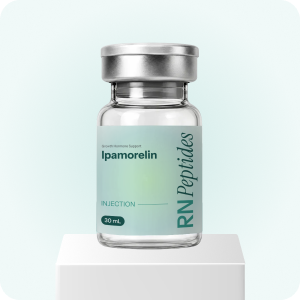
Ipamorelin
- Reviewed by a licensed nurse practitioner in your state
- Prescription issued only when clinically appropriate
- Nurse support throughout the ordering process
- Details on request
Selecting a product doesn’t guarantee a prescription. Review fees, availability, and medication-specific information with your clinician and at checkout. The How Ordering Works page walks through each step.
Sources
- FDA, Briefing Document on Ipamorelin-Related Bulk Drug Substances, Pharmacy Compounding Advisory Committee (October 29, 2024)
- FDA, Final Summary Minutes, Pharmacy Compounding Advisory Committee (October 29 and December 4, 2024)
- FDA, Certain Bulk Drug Substances for Use in Compounding That May Present Significant Safety Risks
- Beck DE, et al. Ipamorelin for postoperative ileus. International Journal of Colorectal Disease, 2014
- Gobburu JV, et al. Pharmacokinetic-pharmacodynamic modeling of ipamorelin. Pharmaceutical Research, 1999
- Raun K, et al. “Ipamorelin, the first selective growth hormone secretagogue.” European Journal of Endocrinology, 1998
- Liu H, et al. Growth hormone in the healthy elderly. Annals of Internal Medicine, 2007
- McDermott Will & Schulte analysis of FDA’s 503A compounding framework (July 2026)
This article offers education alongside, not in place of, medical advice. Talk with a qualified clinician about your health history before any treatment decision.